
Which One Is More Important: the Amount of Knowledge We Have or the Amount of Assets We Acquire?
It is evident that the amount of knowledge we have impacts both our lifestyle and its quality. But is there a scale even more important than knowledge itself?
Do we fully acquire and internalize everything we learn? Are we truly able to apply that knowledge in our daily lives?
Is there complete alignment between what we know and the skills we possess? Or is there a difference between the amount of knowledge we have and the assets we aquire?
Previous Articlely, we discussed the concept of the scale in detail and explained its importance. In this lesson, we intend to explore the concepts of knowledge, asset, and how both relate to the scale. The scale serves as a mirror through which we can observe the assets, shortcomings, strengths, and weaknesses, whether in ourselves or in other people. Whether we are concerned with the correctness and precision of our actions, or indifferent toward such matters, we cannot escape or deny the reality of a scale that exists. For instance, one important health precaution is to avoid contaminated food. Regardless of whether we are aware of this guideline or choose to follow it, consuming contaminated food or water will still put us at risk of illness. Our understanding or acceptance of this scale does not alter the reality of the danger involved.
In another sense, the scale is like a container: the more accurately and precisely we perform a task, the fuller this container becomes. Therefore, the fullest container in any field belongs to the one who has fully adhered to and applied all the relevant principles.
In the matter of the scale, just like in all other subjects, we are in need of both knowledge and ma’rifa. Knowledge refers to the extent of our awareness of the scale’s existence, while ma’rifa represents the assets—the practical action through which we can make our scale heavy and full.
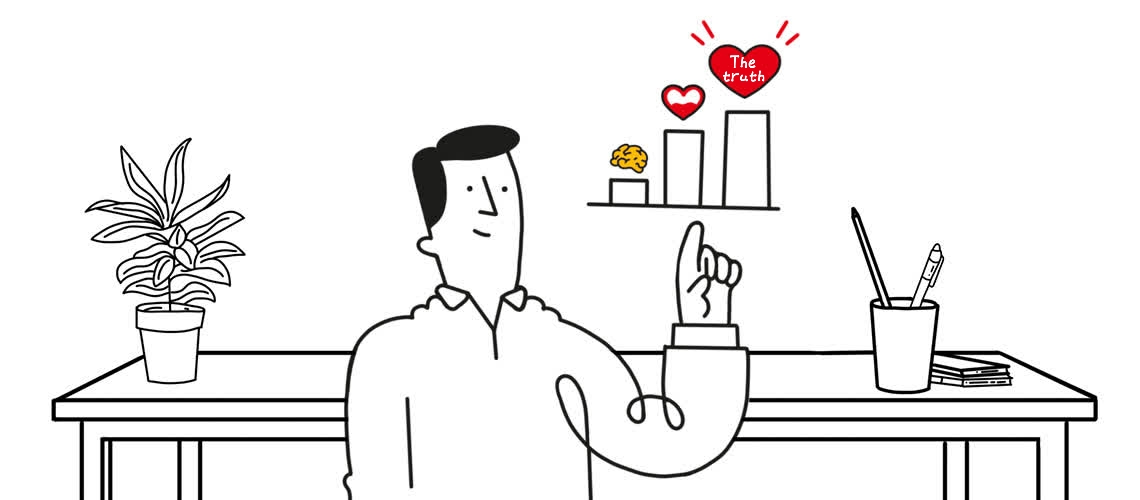
With this in mind, it is not the amount of knowledge we have that matters, but the amount of assets we acquire.
In other words, simply having knowledge and awareness of the truth cannot, on their own, provide guidance. We all know there is a significant gap between knowledge and ma’rifa—that is, between what we know and what we acquire as assets. At times, we may never succeed in transforming our knowledge into asset. What we know and have learned remains forever as information, never becoming part of our lived reality or making any difference in our actions. It is like a person who knows a great deal about driving and has learned every step of it in theory, yet has never once sat behind the wheel or actually driven a car.
In previous lessons, we noted that the scale of a person’s asset—in terms of heart and soul—reflects the degree of their alignment with the Hereafter. Since the true essence of our life lies beyond this world, in the eternal world of the Hereafter, the more we are in compatibility with that realm, the heavier our scale will be—and the more fortunate and blissful we will become.
If we seek a heavy and significant scale, we must prepare its prerequisites and requirements in this very world. That is, we must gain sufficient knowledge about the scale, and also understand what kinds of assets are needed along this path.
In this lesson, we are seeking to understand the relationship between the amount of knowledge and asset. Is it enough to simply know the meaning, concept, and reality of the scale? Can our scale be filled and made heavy merely through our knowledge and information? What is the role of asset in attaining a heavy scale?
What Types of Knowledge and Assets Contribute to a Heavy Scale?
Scale is a concept we encounter in almost every domain, whether relating to this world or the Hereafter. One of the things we all do, whether consciously or unconsciously, is evaluation. Our judgments about ourselves and others are usually based on evaluating thoughts, actions, words, and behavior. In the Hereafter, too, we will be evaluated; but for any evaluation to take place, there must be a standard and a scale.
Allah says in the Quran: “The scale [for the weighing] on that Day will be the truth [1].” The truth is that which aligns with the purpose of creation. Based on this definition, and given the relationship between knowledge and asset, we must know that only those types of knowledge and asset that are aligned with the truth—and serve the purpose of our creation—can fill our scale. To build a heavy scale, the first step is to examine our knowledge and assets. How much of our information, decisions, relationships, behavior, thoughts, and overall lifestyle are aligned with the truth and attuned to it?
In exploring the relationship between the amount of knowledge and asset, we must pay attention to two factors: the type of knowledge and the quality of the asset. In every orderly and well-structured system, there is a direct correlation between inputs and outputs. The purer and healthier the inputs, the higher the quality of the outputs. Our soul, as one of the most meticulously designed systems in all of creation, is no exception. We will only witness pure, luminous, and truth-oriented outputs from our soul when we have first nourished it with inputs possessing those very same qualities.
Examining the Relationship Between the Truth and Mental Knowledge
Since God has breathed His spirit into the human being [2], we all inherently possess the essential knowledge needed to fill our scale. But do we all make use of this knowledge? Do we know how to properly utilize such knowledge? We must understand what kind of knowledge is required on the path toward attaining a heavy scale, and how these types of knowledge can transform into assets, lead to righteous deeds, and ultimately contribute to a heavy scale.
One of the outcomes of examining the relationship between the amount of knowledge and asset is that it leads us to seek out types of knowledge that contribute to the heaviness and of our scale. One aspect of the relationship between scale and knowledge and asset lies in awareness and information. Accurate knowledge helps us avoid negligence. It prevents us from engaging in any activity—be it familial, social, political, cultural, military, economic, or artistic—at any cost. Instead, we are reminded to align every action and lifestyle choice with divine scales. What is crucial to remember about knowledge is that even the most accurate and complete forms of information and knowledge must be placed alongside the scale in order to have any effect. As Allah also emphasizes this alignment in relation to the most perfect version of knowledge—the Quran—stating that He sent the prophets with the Book and the scale [3]. Indeed, we are in need of knowledge and information, but even more so, we are in need of a scale. Without a scale, books, information, and jurisprudence cannot be useful too. Thus, the relationship between knowledge and scale is undeniable.
To illustrate the importance and necessity of aligning knowledge with the scale, consider the example of certain jurists who, despite possessing deep jurisprudential knowledge and remarkable skills in reasoning, sometimes fail to apply these principles correctly and are led astray. The reason lies in the absence of the scale. Knowledge on its own is not sufficient; a jurist must also hold fast to the scale. When knowledge is accompanied by the scale in juridical matters, the jurist will become someone who deeply understands the human psyche, is attuned to the conditions of time and place, and is capable of issuing the most accurate and relevant rulings based on the true needs and circumstances of society.
Examining the Relationship Between the Scale and Asset
Understanding the relationship between the amount of knowledge and asset is essential, for it determines what types of knowledge and what forms of asset we ought to acqire. The only way to ensure that we have truly understood this connection is to refer to the words of God and the Infallibles (Peace be upon them). If the knowledge we acquire is affirmed by God, and if it leads to the heaviness of our asset, then without doubt, it will contribute to the fullness and heaviness of our scale.
As noted at the beginning of this lesson, the relationship between the scale and both knowledge and asset applies to matters of this world, while also directly shaping our eternal fate in the Hereafter. In the Hereafter, we will be evaluated with scales, and thus it is necessary for every individual to know their position and the corresponding scales, so that they do not become lost amid the critical stations of the Day of Judgment [4]. Of course, mere awareness and understanding of such matters are not enough to ensure success, bliss, or salvation. In many cases, knowledge will bring no benefit unless it is transformed into action.
Knowing the scales of the Hereafter is the first step. The next is to take action and acquire the kind of assets that make those sacles heavy. In the end, what truly makes our scale heavy is the knowledge that has been transformed into asset and ma’rifa—knowledge that has nourished the soul child.
As discussed in previous lessons, the scale is a spiritual truth. The more we are align with the truth, the greater our chances of salvation and success on the Day of Judgment and as we traverse the stages of the hereafter. With this standard in mind, we must pursue knowledge that is grounded in the truth so that we may acquire assets of the same kind—and ultimately attain true bliss. For, according to the word of God, our ultimate success hinges on the weight of our scale [5]. The heavier the scale, the more our deeds and assets have aligned with the truth.
In this lesson, we examined the relationship between the scale, knowledge, and asset. Although the type and quality of our knowledge are significant and influence the weight of our scale, the scale appears to lean more towards asset. This is because, when we enter the Barzakh and the Day of Judgement, we are measured by both our knowledge and our assets. Ultimately, our value and worth are determined by the amount of our ma’rifa and depth of belief. Once a person grasps the connection between the scale, knowledge, and asset, they will no longer seek any knowledge or engage in just any action. This understanding will lead to a more structured mindset and lifestyle, one that is divinely aligned with the purpose of our creation.
References
[1]. Quran 7:8
[2]. Quran 38:72
[3]. Quran 57:25
[4]. Muḥammad Bāqir al-Majlisī, Bihār al-Anwār, trans. Hub-e-Ali Organization, vol. 7, p. 111, ḥadīth 3, https://hubeali.com/online-books/online-english-books/bihar-al-anwaar/
[5]. Quran 23:102