
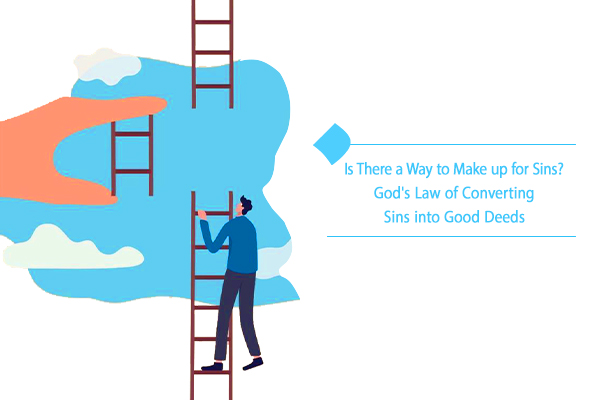
How Can We Use God’s Name al-Mubaddil to Make up for Sins?
Surely, many of us have wished—more than once—to undo the wrongs of the past:
“If only I could go back and fix all my mistakes…”
“If only I could return to childhood and live life the right way this time…”
But in a world of limited time, how can we ever make up for a life filled with error and sin? Is there a shortcut—something that can strengthen the human dimension of our existence and change us, in God’s eyes, into someone truly good?
In previous lessons, we learned that this world is our second womb. God has endowed this worldly life with a womb-like essence, which means as long as we are alive, we have the chance to change. We only need to know the rules and mathematics behind it. All of God’s names and attributes exist potentially and inherently within us, and our only mission in this world is to actualize and manifest them.
One of these divine names is al-Mubaddil—The Changer of Forms—by which God, through the elixir of repentance (tawbah), can transform even our darkest sins into light. We must be able to acquire God’s name al-Mubaddil to reach happiness. Many people with corrupt pasts have activated this name within themselves, reversed a lifetime of wrongdoing, and reached lofty spiritual ranks—some even becoming martyrs on the battlefields of truth through military jihad [1].
If you are seeking true change and want to rewrite your destiny, this article explores how to awaken the name al-mubaddil within you and turn your sins into sources of divine reward.
God’s Name al-Mubaddil—A Divine Tool to Turn Sins into Rewards
Recycling factories are among the most profitable in the world. According to statistics, the global financial turnover from waste recycling amounts to hundreds of billions of dollars annually. This enormous revenue is generated from items that people often discard without a second thought. As a result, recyclables are sometimes referred to as ‘dirty gold’—unclean, yet full of value.
Each person is a product of their past. Who we are now is the sum of our beliefs, decisions, relationships, and actions. We may feel guilty about certain parts of our lives and wish we could throw away parts of our story like the trash we throw away when we do not want it. But here is the good news: You do not need to discard your mistakes with God. You can recycle them—turn them into valuable assets!
Our Creator is so compassionate that He has made it possible for anyone to return to Him, at any stage of life. Even if we were the worst person on earth, God can turn all our past sins into good deeds [2]. He has granted each of us the ability to acquire His name al-Mubaddil—that functions just like a recycling system. By activating this name within us, we can turn the “waste” of our beings—sins, darkness and pollutions in the heart—into light, peace, and divine reward, just like recycled garbage becomes usable resources.
But of course, this conversion comes with conditions. What do you think these conditions are?
What Is the Law of Turning Sins into Good Deeds?
You may wonder how can someone immersed in sin repent once and all their sins turn into good and pure deeds. You might even ask, “If God turns sins into rewards, then why not sin as much as we like?” But it is not that simple. Turning sins into good deeds comes with specific rules; we need to enter God’s “recycling factory” using the formulas He has provided, so our past sins are not just forgiven but actually turned into good deeds. The steps for this transformation are as follows:
• We must sincerely repent and turn away from our wrong paths.
• We need to strengthen our faith in God.
• From that point on, we should live according to God’s commands.
In reality, our sins will only be converted into good deeds when we activate God’s al-Mubaddil name within us. This activation process is not easy; like any significant endeavor, it requires patience and effort.
The process to make up for sins and converting bad deeds into good deeds, just like the process of treating illnesses, follows a mathematical system. A sick person, while taking medication under a doctor’s supervision, must also endure the hardships of the treatment period and accept its side effects. For example, in cancer treatment through chemotherapy, the patient faces hair loss, physical pain, and other limitations while remaining patient until they see results. Similarly, repentance and prioritizing inner nature over material nature. During this journey, we must completely ignore Satan’s whispers and the discouraging thoughts he tries to instill in us. We might stumble and make mistakes again along the way, but we shouldn’t be afraid; we must stay determined to continue on our path. It is important to note that this process varies for each individual; that is, to make up for sins and to convert bad deeds into good deeds happens differently in everyone’s life based on their unique circumstances. We will explore this further.
Types of Conversions and the Path to Make up for Sins
Since God has breathed His spirit into us, we all carry the noble name of al-Mubaddil within us; however, this name activates differently for each person. The path to make up for sins and to convert bad deeds into good deeds is tailored to our individual responsibilities and personal characteristics.
In His boundless mercy, God, as our Lord and Mentor, places challenges and tests in our lives that serve both to atone for our sins and elevate our ranks in the Hereafter. When designing these tests, God considers each person’s capacity and abilities, focusing on our personality weaknesses so we can grow and improve by overcoming these flaws. As a result, one person may be tested through their spouse, another through their child, one through illness, another through physical strength or exceptional intelligence, one through poverty, and another through wealth. However, what is important is that no matter what tests we face, we can use God’s name al-Mubaddil to turn the troubles, sorrows, humiliations, insults, and all the various problems imposed on us from the outside into health, strength, and light within.
We have previously touched on this topic in our discussion of God’s justice, stating that humans are not equal in terms of worldly blessings and possessions. Each person is tested according to their circumstances; therefore, where we currently stand or what past we have behind us is not important at all. What matters is the extent of our efforts for self-improvement. If each of us, in the conditions we find ourselves in and with the resources we have, fulfills our duties correctly and practice the name al-mubaddil, we can reach the highest spiritual ranks through these tests and can compensate for all our past shortcomings in a short period.
In this lesson, we discussed the noble name al-Mubaddil and how it helps us to make up for sins and converting bad deeds into good deeds. We noted that activating this name within us functions like a recycling system that transforms all impurities into light and purity. However, the function of the name al-Mubaddil goes beyond what we discussed; it plays a role in all transformations in the world. As mentioned earlier, the entire universe operates under divine names, and the name al-Mubaddil is one of them. A wise person is someone who makes the most of this name to turn the waste of their life into eternal wealth. Can you think of a better recycling method than this?!
References
[1]. Struggle in the cause of Allah
[2]. Quran, 25:70