
Exploring the Ways to See God’s Presence: From the Universe to the Teachings of the Quran and the Infallibles
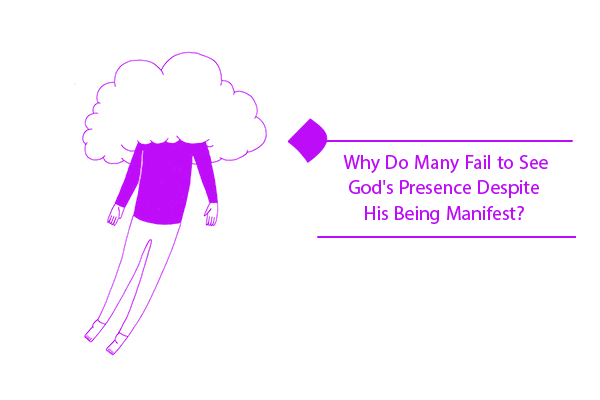
If God is “The Manifest” (Al-Zahir), why do many fail to perceive Him? This question has been one of humanity’s most ancient concerns throughout history. The world around us is full of order, beauty, and meaning, yet modern humans feel more distant from God than ever before. It is as if a veil has fallen between existence and its Origin. This article aims to show that the issue lies not in God being hidden, but in human spiritual blindness. The Quran, the words of the Infallibles, and the human intellect are three synergistic paths enable us to see God’s presence—three angles through which to view the same singular truth. By exploring these paths, we find that the relationship between God and creation is not just a doctrinal debate, but a way to understand humanity’s position in the universe and to give meaning to life.
Since the dawn of creation, humanity has stood between two great wonders: the grandeur of the universe and the invisibility of God. While the Quran introduces God as “The Manifest,” many perceive Him as absent. This apparent paradox leads us to a fundamental question regarding the relationship between humanity and existence, and the relationship between the Creator and creation. Is it possible that God is present in all things, yet humans fail to see Him due to perceptual limitations? Or is it that our perspective on the world has been flawed from the start, that the truth stands before our eyes, but our “inner eye” is closed?
From a monotheistic perspective, the world is not a scattered collection of objects, but a stage for God’s manifestation. The realm of existence is a mirror in which every atom speaks of its origin. This very mirror is the key to understanding the link between God and creation. The Quran and the teachings of the Infallible Imams teach us that knowing God is not a distant goal. Rather, it is the clearest truth in the universe, provided that one purifies their tools of perception. This article intends to analytically examine the various paths available to see God’s presence, showing how the three ways, contemplating creation, listening to the words of the Infallible Imams, and intellective self-knowledge all lead to one conclusion: God is Manifest, it is the human that suffers from blindness.

One Can See God’s Presence through the Quran: The World Is the Stage for the Manifestation of God
The Quran constantly invites humanity to look. This looking is not merely scientific observation, but a form of seeing with the heart. From the Quranic perspective, God is not just the Creator of the universe, but a truth that that is constantly present in the very fabric of the world. The verse “He is the Manifest and the Hidden” [1] clearly states that God’s manifestation in the heart of existence is inherent to His essence, not an added attribute. This implies that the relationship between God and creation is not an external or arbitrary one, but rather an existential bond; creation possesses no meaning without God.
The Quran does not ask us to “imagine” God. Rather, it invites us to “witness” Him through the signs of creation. It is as if the world is a book, and every phenomenon is a sentence within it. If a person’s perception is pure, everything becomes a sign to God’s manifestation. However, if the heart is clouded by negligence, even the clearest signs will appear meaningless.
The conclusion of this section is that the Quran presents God’s presence as the most luminous truth of universe, shifting the core issue toward the capability and purity of human perception. From this perspective, the link between God and creation is not a mere claim, but an existential experience that reveals itself through the light of conscious awareness.
The Limits of Human Perception and the Failure to See God’s Presence
If God is Manifest, why do humans fail to see Him? The answer lies in an analysis of the “tools of perception.” Just as a diseased eye cannot see the light of the sun, a heart trapped in negligence loses the ability to see God’s presence. The human stands before a truth more evident than anything else, yet because the tools needed to know God are tainted, they feel as though God does not exist.
Negligence is the greatest enemy of perception. Instead of seeing the true essence of phenomena, humans stop at their outward appearances. Concepts, preoccupations, attachments, and disordered desires act like a thick veil between the human and the world, preventing them from seeing the signs of creation. When the Quran states: “Truly it is not their eyes that are blind, but their hearts which are in their breasts” [2], it precisely refers to this limitation.
In this sense, the failure to see God’s presence is not evidence of His absence, but rather evidence of the weakness of human vision. Just as God possesses manifest Light, He requires a seeing eye to be perceived. This eye is only empowered through the purification of the heart and inner vigilance. The moment a person goes beyond outward appearances, they realize that the connection between God and creation has always been present before them, yet they simply failed to see it.
The Teachings of the Infallibles: Moving from Proof to Intuition to See God’s Presence
In the view of the Infallible Imams (Peace be upon them), God is the only Manifest truth of the universe, a manifestation so bright that nothing in the realm of existence is clearer, and no created being can possess a clarity beyond His. If He is Manifest, then witnessing Him must be possible within this very world. This is because a manifestation cannot be more apparent than the one who manifests himself through it, such that it would act as a mere intermediary for seeing Him. This point is the core of the relationship between God and creation in the teachings of the Ahl al-Bayt (Peace be upon them): The world is the stage for God’s manifestation.
The world is not an independent lamp that illuminates God. Rather, God Himself is the light, and all creations are seen only through the radiance of His Light. This profound meaning is echoed in the words of Imam Ali (Peace be upon him), who said: “I saw nothing except that I saw God before it, after it, and with it” [3]. Through this statement, it becomes clear that no being possesses independence, every phenomenon we encounter is a window revealing God’s presence.
The Infallible teaches us that God’s existence does not require proof, just as light does not require a reason to be seen. This perspective shifts the human path from long, and sometimes complex, philosophical arguments toward an immediate perception.
The words of the Infallibles elevate the human relationship with existence from the level of mental awareness to the level of intuition and presence. In this view, the link between God and creation is not merely a “sign-based” relationship. Rather, every being is the very manifestation of God. Existence is not something outside of God to seek to represent Him. Existence is His manifestation.
The analytical conclusion of this section is that the Infallibles unveil a truth already stated by the Quran but often overlooked: God is not at the margins, but woven into the very heart of the universe.
Self-Knowledge: The Intellective Way to See God’s Presence
In the monotheistic tradition, the human is introduced as the most perfect “sign” of God. Within the human being lies a complex array of powers, consciousness, desires, and existential experiences, none of which are self-subsisting. This very existential dependency serves as a gateway to understanding God’s presence. The famous prophetic tradition, “He who knows himself, knows his Lord,” illuminates this profound truth.
When an individual contemplates the truth of their own existence, they realize that their will, knowledge, power, and even their very being do not originate from within themselves. Their existence is bestowed, not inherent. This realization creates a form of intellective intuition: The human being is nothing without God. In other words, self-knowledge is a way to witness the connection between God and creation at a deeper level. This is because the human being is a microcosm of the dependent structure of the entire universe.
Self-knowledge shifts humanity’s search from the external world to internal discovery. One realizes that God is not in a far-off place, but is woven into the very fabric of one’s being. Every moment of life, every perception, and every decision carries His mark. This dimension of knowledge is the ultimate step to see God’s presence.
However, if God is Manifest, why do so many fail to experience Him? The answer lies in a moral-epistemological principle: Purity of the heart is the condition for God’s manifestation to be perceived, not a condition for proving His existence.
For this reason, while the Quran invites humanity to look at creation, it simultaneously warns against sin and negligence. Sin darkens the heart, and negligence focuses one’s attention on appearances. A defiled heart is like muddy water; it lacks the ability to reflect the sky.
Those who purify their hearts through piety, pure intention, self- scrutiny, and by distancing themselves from spiritual impurities, begin to see divine signs in everything. For them, every phenomenon is a reminder of God, and the link between God and creation is not a mere concept, but a lived experience. Purity of the heart is, in truth, the refinement of the tool needed for knowledge, the instrument with which one can see the world anew.
The pure-hearted see God’s presence in everyday life: in a smile, in a minor event, in the order of nature, in the power of choice, in moments of peace, and even in hardship. For them, creation is not a canvas, but a window, a window that opens toward God.
We can now summarize the main point of our discussion:
-The Quran shows that God is Manifest, and the entire universe is His sign.
-The Infallibles teach us that doubting God is meaningless, as all things are His manifestation.
-Self-knowledge proves that human existence is dependent on God and possesses no meaning without Him.
These three paths are three distinct layers of a single truth:
To see God’s presence means seeing the connection between God and creation in the depth of daily occurrences. We need to realize that the world is neither separate from God nor independent of Him. Existence is inherently dependent on Him, and this dependency is the very essence of creation.
When a person distances themselves from negligence and impurity, they discover that God has always been near. The failure to see Him is a result of human limitation, not God being hidden.
Ultimately, the answer to the question posed at the beginning of this article is both simple and profound: God is Manifest, it is humans that must regain their sight.
References
[1]. Holy Quran, 57:3
[2]. Holy Quran, 22:46
[3]. Sadr al-Din al-Shirazi, Al-Asfar, vol. 1, p. 117; vol. 4, p. 479; vol. 5, p. 27.