
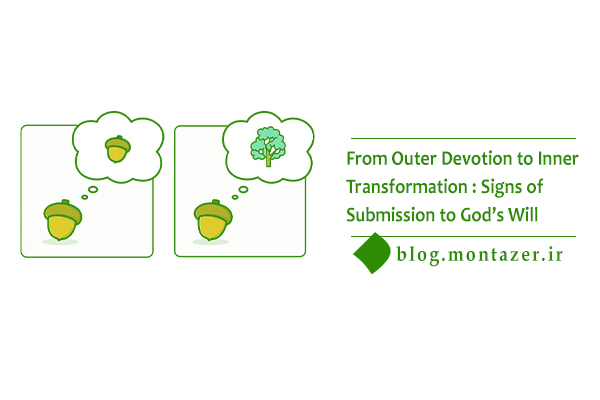
Gratitude, Inner Peace, Sincerity: Three Essential Signs of Submission to God’s Will
At first glance, two people might look identical. Both actively engage in worship, both follow religious rituals, and both profess their faith in God. Yet, in the flow of everyday life, a decisive divide emerges between them: When hardships strike, the first person crumbles. They react to suffering with ungratefulness, their relationships are marked by resentment, bitterness, and oversensitivity, and they are quick both to take offense and to hurt others. The second person, facing the exact same circumstances, remains calm, resilient, and grounded. In moments like these, the core question is not who performs more outward rituals, but rather: Who has formed a truer connection with God in their existential structure?
This raises a fundamental question: How can we tell if someone is truly on God’s path? If the measure is not merely the abundance of outward worship, where must we look? This question shifts our focus from overt behaviors to a deeper level—to where a person’s true relationship with God, or its opposite, is revealed in their character, in how they face suffering, the quality of their happiness and peace, how they direct their love and hate, and in the purity of their intention. From this perspective, faith only becomes meaningful when it transforms a person’s inward self, shifting their focus from self-centeredness to God-centeredness.
This article aims to explain this very relationship. It will clarify the criterion for recognition, then examine the signs of being on the divine path across the three realms of gratitude, peace, and regulating love, and finally show how the ultimate form of this transformation manifests in achieving sincerity. In this way, the reader can identify the path of the discussion not merely at the level of concepts, but in the context of their own daily life.
Signs of Submission to God’s Will: Shifting the Criterion from the Outward to the Inward State
The starting point of this discussion is correcting the criterion by which we judge. As long as the volume of outward worship remains the primary measure for assessing obedience to God’s will, the risk of error is high. We may perform religious practices while our souls remain unchanged. Consequently, we must seek the true criterion where a person’s true connection with the Divine is revealed: in their moral traits and inner states.
This shift from the outward to the inward is not merely a pedagogical change, but a fundamental shift in understanding the human truth. If a person’s connection with God is a genuine reality, its effects must also be real; it cannot remain confined to empty words or fruitless actions. True submission leaves an indelible mark on the soul. Thus, being in a divine direction must be reflected in the quality of one’s character. The true measure is the extent to which a person has moved away from self-centeredness and bondage to worldly desires and drawn closer to the Divine orbit.
Accordingly, this discussion focuses on signs that indicate an existential bond rather than repeated behaviors. This distinction defines the entire structure of our inquiry and prevents faith from being reduced to a set of routine actions that leave no footprint on the human soul.
Signs of Submission to God’s Will in Facing Suffering: Gratitude Over Ingratitude
One of the primary signs that someone is on the divine path is how they handle shortages, illnesses, and calamities. The issue is not merely the endurance of suffering, but one’s perception of their place in the universe. When individuals view themselves within God’s kingdom, they do not perceive suffering as occurring in an abandoned, ownerless world. Instead, they view it through a lens that acknowledges that creation ultimately belongs to God. This perception naturally results in gratitude.
Gratitude here is more than a word or superficial contentment. It signals that one’s connection to divine sovereignty remains intact. Ingratitude typically arises when an individual interprets the world through the lens of their own desires, viewing every shortage as a failure of that personal centrality. In contrast, those who see themselves within God’s kingdom stay clear of consuming impatience and bitter protest.
This does not mean denying suffering, but rather accepting it as part of a right relationship with the truth of the universe. A person who repeatedly responds to adversity with bitterness, complaint, ingratitude, and emotional collapse has not yet moved beyond their own desires. Conversely, those who preserve their connection to the divine domain amidst the exact same hardships show that their inner self is shaped by a higher bond.
Signs of Submission to God’s Will in One’s Inner State: Happiness, Peace, and Spiritual Expansion
The second sign appears in the quality of a person’s inner life. Based on our earlier discussion, if the relationship with God is a relationship with Absolute Perfection, its effect on the soul must appear as expansion, not contraction and darkness. Thus happiness, peace, vitality, and spiritual expansion rank among the important effects of moving on the divine path. Happiness here does not mean superficial fun or fleeting excitement, but a state of spiritual expansion born of inner harmony with one’s Origin.
This criterion allows for precise evaluation. If a person, after years of worship, becomes more resentful, arrogant, envious, oversensitive, sharp-tongued, and sad, that certainly is not spiritual growth. True worship naturally purifies the soul of such darkness. When these negative traits persist or intensify, it proves that the external acts of worship have not yet translated into genuine inner transformation.
Understanding this point prevents a common misconception: Outward religious compliance automatically equals closeness to God and true guidance. In contrast, this framework demands that the fruits of worship be visible within the soul itself. There is something inherently flawed in any worship that results in more bitterness, more harshness, and deeper sadness. Therefore, surrender to God’s will is measured not by counting good deeds, but by weighing their existential result.
Signs of Adherence to the Divine Will in the Love and Hate Hierarchy: Moving from Self-Centeredness to God-Centeredness
The next focal point is the hierarchy of love and hate hierarchy. No relationship with God is complete until it is reflected in this system. The issue is not merely controlling one’s emotions, but the criterion by which one loves and hates. As long as those criteria remain personal, tribal, ethnic, factional, national, professional, or gender-based, the inner structure stays confined to the realm of limited desires.
Here, acts of worship serve as a tool for transformation. Prayer and fasting have a true effect when they make a person’s criteria divine and separate them from personal whims. Even if a person performs many acts of worship, they have not yet tasted the true sweetness of faith if their loves and hates remain captive to non-divine motives. This is not merely about simple emotions; it is about the very framework through which a person judges things, people, and events.
Making love and hate divine means transcending self-interest, personal attachments, and ego-driven sensitivities, and tuning one’s value system to God’s will. In such a state, love is no longer merely personal desire, and hate is no longer an ego-driven reaction. Both fall under an order that pulls a person out of inner fragmentation and duality. For this reason, signs of submission to God’s will at this level are among the most obvious marks of change in the inner being, as they show that the criterion for evaluation itself has been transformed.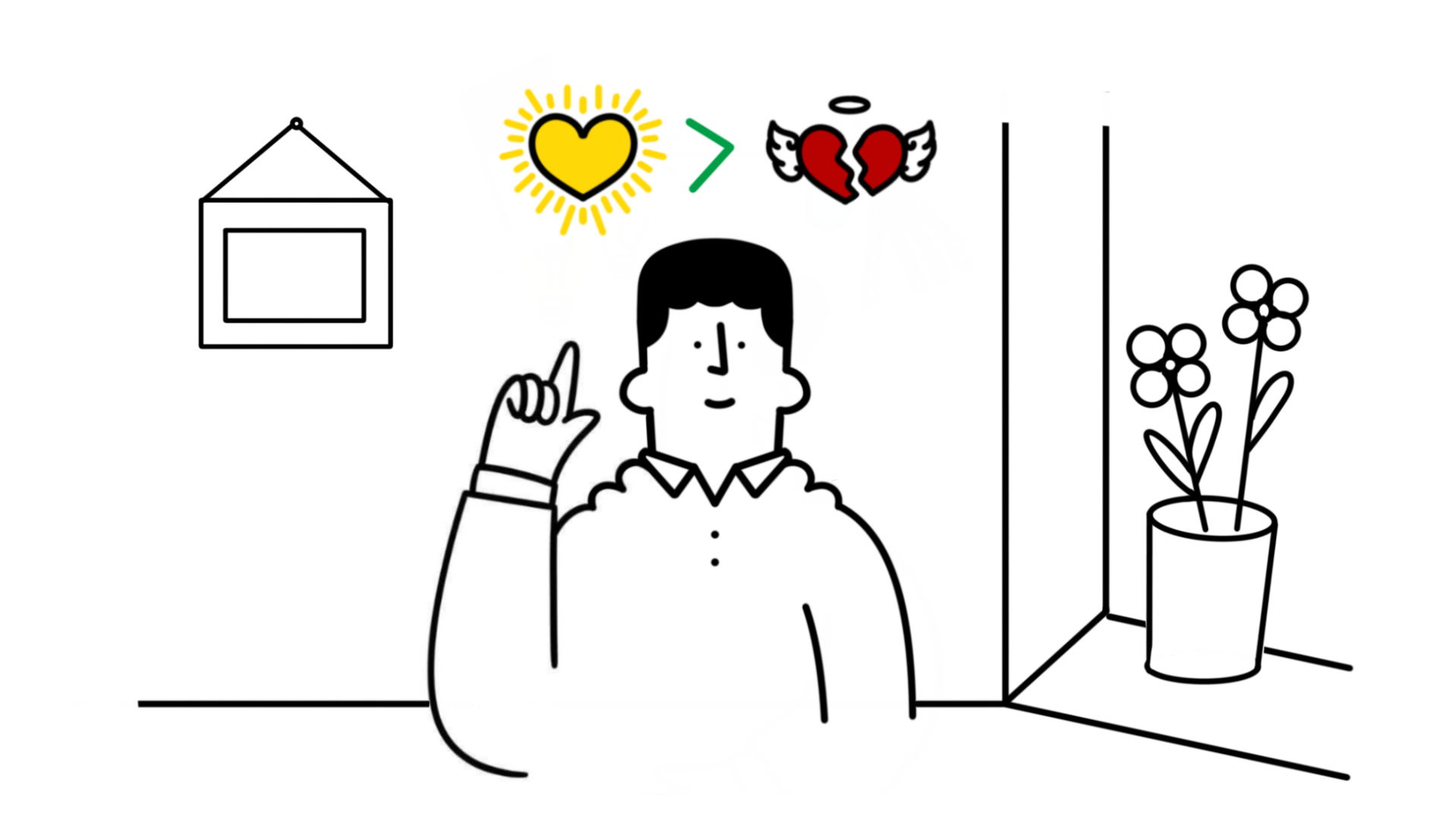
Sincerity: The Highest Degree of Divine Connection
If gratitude, inner peace, and the proper ordering of love (within the hierarchy of love) are key indicators of walking in the divine path, then sincerity must be regarded as the ultimate culmination of this journey. Sincerity means performing a deed solely for the sake of God, without expecting reward, thanks, or compensation from others. This state is more than a mere moral virtue; it indicates that the very center of human will has shifted.
Sincerity produces two clear outcomes: First, the person stops comparing themselves to others; second, they no longer seek revenge or retaliation. Both comparison and revenge signal that an individual still lives within a network of selfishness and a need for payback. Sincerity breaks this network.
At this stage, the signs of true obedience manifest in their clearest form. A person who acts for God is freed from both the bondage of others’ judgments and the tensions arising from expecting human rewards. This freedom does not lead to social indifference or passivity; rather, it leads to an existential focus on the true purpose of the action.
Recognizing the Opposite Direction
This discussion also makes it possible to recognize the opposite direction. Whenever ingratitude takes the place of gratitude; whenever religious practice leads to sadness, resentment, envy, arrogance, or oversensitivity; whenever love and hate are governed by ego-driven attachments; and whenever a person’s actions depend on receiving reward or reciprocation from others, that person’s relationship with the divine path has been disrupted. In such a state, even if an action appears religious outwardly, its inner reality has not yet been freed from the dominance of self-centeredness.
This contrast is important because it clearly marks the boundary between two paths. One path leads a person toward inner wholeness, spiritual openness, divinely guided values, and sincerity of intention. The other keeps a person caught in inner conflict, bitterness, personal attachments, and a constant need for the approval of others. Therefore, the signs of submission do more than describe a spiritual condition; they help reveal the existential direction of a person’s life.
A Diagnostic Criterion for Daily Life
In conclusion, a person’s connection with God is measured not by the abundance of outward deeds, but by the quality of their soul’s construction. Gratitude in the face of deprivation, inner peace, a divine love and hate hierarchy, and sincerity in action all indicate that a person has moved away from self-centeredness and into the divine orbit. In contrast, ingratitude, bitterness, envy, resentment, personal attachments, and the expectation of rewards are signs of remaining trapped in self-centeredness.
For this reason, the primary question in evaluating a religious life is not how many actions a person has performed, but what relationship those actions have established with the truth of their being. Wherever worship leads to inner transformation, a God-centered life becomes clearly evident. Without this transformation, outward religiosity leads to nothing. Within this horizon, the signs of submission to God’s will are not meant for judging others, but for recognizing one’s own spiritual condition in daily life.
Comments and questions
Ask a question or share your experience with this lesson.
After signing in and enrolling, you can join the discussion.
Be the first to ask a question about this lesson.