

Failing to Help Imam Mahdi (Peace Be upon Him): A Hidden Issue in Our Lifestyle and Everyday Choices
Throughout life, human beings are constantly faced with choices. Some of these choices seem small and routine, while others are decisive and life-changing. Choosing a career, a place to live, a parenting style, an academic path, and even the way we respond to social issues—all are part of a network of decisions that gradually shape the overall direction of our lives. In making these decisions, most people rely on certain criteria: greater comfort, higher security, peace of mind, social advancement, or financial success. Yet one fundamental question often remains on the sidelines of these calculations: What is the relationship between these choices and the Wali of Allah?
From a human perspective, the issue is not merely whether our choices appear outwardly good or bad. A person may be considered morally upright, law-abiding, and even religious by common standards. They may not neglect their acts of worship, may avoid obvious sins, and may behave properly in social relationships. However, if the infallible Imam does not play a decisive role in their system of decision-making, their life will gradually drift away from the axis of divine guidance. This distancing does not necessarily come with dramatic signs or visible crises. More often, it happens quietly, gradually, and almost unnoticed.
The Holy Quran, by presenting the principle that people will be called on the Day of Judgment together with their Imam, shows that a person’s ultimate destiny is judged not merely on the basis of a collection of individual deeds, but on the basis of their relationship with the Imam of their time. From this perspective, the Imam is the standard by which the direction of one’s life is measured—not merely a respected authority or a historical figure. For this reason, removing the Imam from the context of one’s life, even if it is covered by an outward appearance of religiosity, carries serious and decisive consequences.
The issue of failing to help Imam Mahdi (Peace be upon him) becomes meaningful precisely at this point. This phenomenon usually does not begin with open hostility or an outright rejection of his authority. Rather, it takes shape when the Imam is quietly removed from the practical priorities of one’s life. Laziness in accepting responsibility, neglecting the Imam’s role in personal and social decisions, and settling for a minimal level of religiosity are all factors that gradually distance a person from actively standing with the Imam. The outcome of this path is not merely a moral shortcoming or a personal weakness; it is a serious threat to a person’s ultimate salvation.
In this lesson, we will take an analytical approach—grounded in Quranic verses and narrations—to explore where failing to help Imam Mahdi (Peace be upon him) begins, what mechanisms allow it to develop, and how it can ultimately affect both our personal destiny and the future of our society. Our aim is to make clear that this is not merely a theological or emotional discussion. Rather, it is a fundamental criterion for evaluating the soundness of our life’s direction and our future standing before God.
Failing to Help Imam Mahdi (Peace Be upon Him) in Personal and Social Life
Within the Islamic intellectual framework, the infallible Imam is not merely a moral leader or a religious authority. Rather, he is the axis for measuring the path of servitude to God and the standard by which a person’s journey toward Him is assessed. The Holy Quran clearly states: “On the Day When We will call every people with their leader” [1]. This verse shows that the final judgment is not based solely on a collection of scattered deeds. Instead, a person’s relationship with the Imam of their time is the primary criterion for evaluation.
Accordingly, one’s relationship with the Imam is not merely a matter of belief or emotion. It takes concrete form in a person’s lifestyle, priorities, and actions. If an individual’s personal and social life is organized in such a way that their concerns, choices, and goals are shaped independently of the Imam, the result will be nothing but a gradual distancing from the axis of divine guidance. From this perspective, failing to help Imam Mahdi (Peace be upon him) is not the neglect of a minor duty; rather, it is disregard for the most fundamental standard of true success and salvation.
The Role of Laziness in Failing to Help Imam Mahdi (Peace Be upon Him)
In this discussion, laziness does not mean general sluggishness or physical weakness. Many people are hardworking, disciplined, and persistent in their worldly affairs. Yet the very same individuals may hesitate or delay when it comes to responsibilities related to the Imam. This contrast shows that the issue is not a lack of physical ability, but rather a shift in one’s system of values.
A person does not need reminders or encouragement to respond to instinctive desires or personal interests. But when it comes to responsibility toward the Imam, motivation weakens and action is postponed. These repeated delays form the first steps toward failing to help Imam Mahdi (Peace be upon him). If this condition is not corrected, the human heart gradually drifts out of the Imam’s orbit—often without even realizing the depth of that separation.
The narrations do not consider such a state to be without consequences. Imam Ali (Peace be upon him) said: “Whoever falls short in action will be overtaken by sorrow ” [2]. This sorrow is the natural outcome of neglecting one’s responsibilities—a sorrow rooted in those seemingly small acts of laziness.
Negligence and Failing to Help Imam Mahdi (Peace Be upon Him)
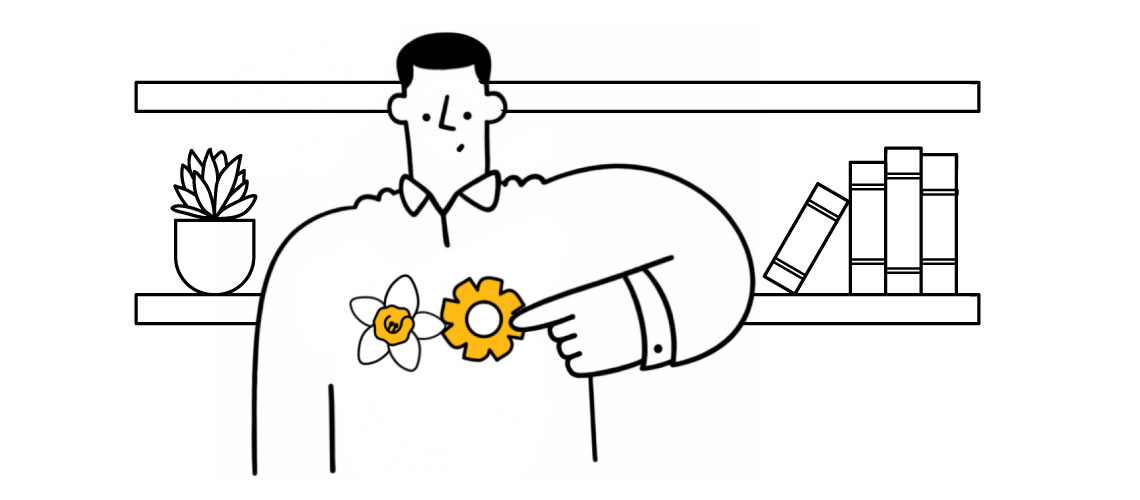
Negligence toward the Imam is one of the most complex—and at the same time most dangerous—harms in a person’s relationship with divine Wilayah (guardianship.) Unlike open hostility, it is often accompanied by a sense of religiosity, clear conscience, and even self-satisfaction. In such a state, a person does not see themselves as standing in opposition to the Imam. On the contrary, they assume that their overall way of life is sound and acceptable. It is precisely this outward sense of reassurance that turns negligence into a subtle and gradual phenomenon—one that is difficult to recognize.
The main issue in negligence is not one’s intention or inner claims, but the position the Imam holds within an individual’s decision-making framework. Whenever the Imam shifts from being a guiding criterion to merely a respected yet non-influential presence, negligence has already taken shape. In such a state, major life choices—from one’s profession and livelihood to forms of social and cultural engagement—are made without evaluating their alignment with the Imam’s path. This gradual exclusion does not arise from hostility, but rather from neglect and habituation.
The mechanism of negligence is often accompanied by a form of inner justification. We tell ourselves that we fulfill our obligations, avoid what is forbidden, and, compared to many others, lead a more upright life. Yet this minimal standard of evaluation displaces the central question: Does this way of living ease the burden of the Wali of Allah, or does it add to his isolation? When this question is removed from one’s awareness, the path of negligence becomes firmly established and its outcome is the very process that ultimately leads to failing to help Imam Mahdi (Peace be upon him).
Negligence also diminishes one’s capacity to hear the Imam’s call. The call “Is there anyone to help me?” within the religious framework is not merely a historical or emotional appeal; it is a continuous summons to responsibility. A heedless person may perceive this call at a cognitive level, yet, because their life is oriented around a different axis, they fail to offer a practical response. This gap between hearing and responding is a clear sign of active negligence—one that gradually hardens into habit.
The danger of negligence is compounded when it extends beyond the individual level and enters the social sphere. A society whose planning, competition, and aspirations revolve around comfort, consumption, and outward progress—even if it invokes the Imam’s name—has, in practice, removed him from the center of its decision-making. In such an environment, awaiting (intizār) loses its active and responsible character, reduced instead to a vague and neutral concept. History testifies that many communities did not abandon the prophets and the friends of God through open hostility, but rather through this very form of quiet, gradual negligence.
This negligence penetrates various layers of everyday life. In the family, when values are defined solely around comfort and convenience; in the economy, when profit and accumulation of wealth become the ultimate criteria for decisions; in work and professional expertise, when skills are used only for personal advancement; and in the realms of science, politics, art, and culture, when the Imam is removed from the horizon of guidance— in all these cases, the issue is not whether something appears religious or secular, but rather the extent to which the Imam shapes the direction of action.
Negligence often begins with a small act of inattention, but ultimately it defines a person’s position relative to the Imam. Repeated decisions, seemingly insignificant, gradually carve a path that either places us alongside the Imam or, without our realizing it, positions us in a way that leads only to drifting away from the side of truth.
The World: A Field for Shaping or Correcting One’s Relationship with the Infallible Imam
In the logic of revelation, the world is not merely a worthless passage; rather, it is the arena where a person’s relationship with the Imam is determined. One’s occupation, place of residence, path of education, and lifestyle choices are all tools that either align us with the Imam or dissolve us into ourselves. If these choices are made without measuring them against our relationship with the Imam, negligence gradually becomes entrenched.
It is in this very arena that a person can correct their path. As long as the opportunity of life remains, it is possible to reassess one’s values and rebuild the relationship with the Imam. However, if this opportunity is lost, failing to help Imam Mahdi (Peace be upon him) becomes a fixed reality, the consequences of which will be revealed on the Day of Judgment.
A Good End and the Consequences of Failing to Support Imam Mahdi (Peace Be upon Him)
In the logic of divine revelation, a good end is not a random, emotional, or momentarily lucky phenomenon. The final destiny of every human being is the natural result of the path they choose throughout life, and one’s relationship with the central guide of divine guidance—the infallible Imam—plays a decisive role in shaping this path. By highlighting that humanity will be called forth alongside their Imam on the Day of Judgement [3], the Holy Quran suggests that divine judgment evaluates more than just isolated deeds; rather, it focuses on the holistic conformity of a person’s life to the path of their Imam.
From this perspective, the Imam is not merely a witness to human deeds; he is the measure of their coherence or fragmentation. A person may perform a set of seemingly righteous acts, but if these deeds are not integrated into a system aligned with the Imam, they will lack weight in the final judgment. A good end is the fruit of years of consciously structuring one’s life around the axis of divine leadership, not the result of a few isolated actions or fleeting emotions.
The vast spiritual distance that grows between a believer and their Imam is frequently born from choices that, at the time, felt entirely trivial. Postponing a responsibility, prioritizing personal comfort over duty, or placing individual concerns above the concerns of the Wali of Allah may seem justifiable in everyday life. Yet, on the whole, these choices carve a path that ultimately shapes a person’s fate. What manifests as procrastination or indifference in this world becomes, on the Day of Judgment, a wasted investment and a lasting source of regret.
The consequences of this path are not limited to individual destiny. A society in which the Imam is sidelined from the center of decision-making gradually loses its sensitivity to truth, injustice, and the divine future. Such a society may appear stable and calm, but it is internally eroding in terms of values. When the concern for building the future according to divine standards is replaced by purely material competitions, the foundations of a collective good end are weakened as well.
Within this framework, a good end is not a sudden reward, but the direct fruit of consistent alignment with the Imam. Every decision consciously made in accordance with this axis is a step toward the well-being of both the individual and society. Conversely, any neglect or gradual removal of the Imam from the standards of life not only exposes a person to individual downfall but also steers society toward futility and the loss of a divine horizon. For this reason, reassessing one’s relationship with the Imam is not merely an ethical recommendation—it is a fundamental necessity for safeguarding a good end in this world and the Hereafter.
According to the Holy Quran and hadiths, quiet negligence of the Imam is no less dangerous than overt hostility. The measure of a faithful life is the alignment of every decision and every lifestyle choice with the Imam. Wherever this alignment is absent, whether individually or socially, the failure to help Imam Mahdi (Peace be upon him) begins. Finding a way out of this path is possible only through a serious reassessment of values and a conscious choice to stand alongside proof of God—the Imam. Such a decision, if not made today, will inevitably become an irreparable regret in future.
References
[1]. Quran, 17:71
[2]. Nahj al-Balagha, Sermon 127
[3]. Quran, 17:71
Comments and questions
Ask a question or share your experience with this lesson.
After signing in and enrolling, you can join the discussion.
Be the first to ask a question about this lesson.