
The Calamity of Occultation and the Avenger’s Position in Ziyarat Ashura: A Model of Active Agency
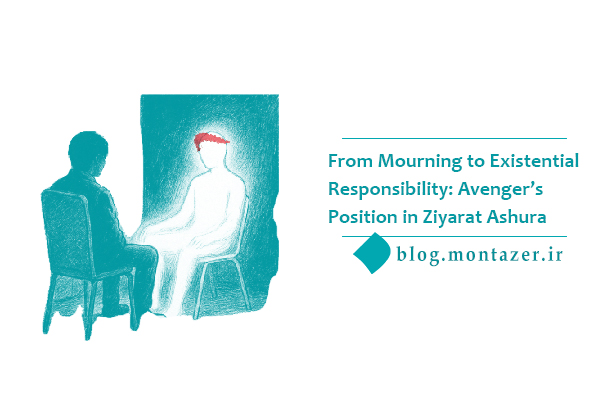
Imagine, in a complex medical crisis, a patient with unstable vital signs is admitted to a highly specialized medical center. Those around him mourn the patient’s suffering. At the same time, however, they ignore the presence of a top specialist —the only definitive hope to save the patient—or fail to remove the obstacles preventing the surgeon’s access. While mourning the patient’s wounds stem from genuine compassion, the absence of the specialized healer creates a deeper and more fundamental crisis.
In the realm of humanity’s spiritual life, the historical event of Ashura has always been a focal point of great sorrow and weeping. However, the logic governing religious ontology requires that our perspective rise from the level of a historical event to that of a contemporary need. The primary crisis lies not merely in the occurrence of a past tragedy, but in the ongoing deprivation of the Infallible’s leadership. This reality calls us to revisit the position of the avenger (Muntaqim) in Ziyarat Ashura and understand its relationship to our duties today.
Clarifying the Essence of the Great Calamity and the Greatest Calamity
In analyzing the grievous events of Islamic history, the tragedy of Ashura is described as great. Its greatness lies in the desecration of truth and the martyrdom of the infallible Imam. Nevertheless, beyond this great calamity lies another—the greatest calamity—which has been largely forgotten. The greatest calamity is not a frozen event in the past, but an ongoing condition in the present: humanity’s fundamental deprivation of the infallible expert.
If the great calamity is the physical loss of an Imam, then the greatest calamity is the continued deprivation of humanity from the highest level of knowledge and purity needed to manage its affairs. This deprivation is the root of all human suffering. Until this deficiency is understood, a true comprehension of the avenger’s position in Ziyarat Ashura will not be attained, because true revenge, in this school of thought, is precisely the removal of this structural deprivation.
Analysis of the Infallible Expert’s Place in the Geometry of Salvation
Why is the absence of the Imam from the seat of authority the greatest calamity for human society? In this intellectual framework, the Imam is not merely a spiritual guide for navigating this worldly life; rather, he is the only one who, by virtue of his connection to divine revelation and his infallibility, is capable of managing the complexities of human life.
When we speak of the urgent need for the Imam, we are pointing to an ontological (Takwini) need. To attain salvation and felicity, human beings need a guide fully aware of both the manifest and hidden dimensions of their existence. The rejection and displacement of this expert for over 1,180 years means the suspension of humanity’s tool of eternal salvation. Under such conditions, any attempt to reform affairs without this foundational axis will remain incomplete. God’s curse upon those who caused this deprivation is not an emotional reaction, but a legal and ontological verdict against those who have blocked the path of human growth.

Deviation from Priorities: From Economic Issues to the Rule of Justice
One of the fundamental challenges in modern and even religious societies is replacing foundational priorities with superficial concerns. Today, human societies are preoccupied with economic fluctuations, subsidies, and livelihood. Although these matters are important in daily life, from a philosophical perspective, they are symptoms of a larger cause. The world’s foremost problem is not fluctuations in commodity prices, but the failure to establish a global government of justice. With each passing era of history, humanity suffers ever-greater losses without the advent of the infallible expert.
Until the urgent need for the Imam’s presence is transformed into a heartfelt conviction and a collective demand among both elites and the general public, society’s energy will be wasted on solving crises that are themselves products of the absence of the expert infallible guide.
Many cultural failures stem from focusing on outward appearance while neglecting core foundations. The foundation of a good life (hayat tayyiba) is the Imam’s presence at the head of governance. When this foundation is missing, any reforms at the superficial level, such as economic reforms or individual ethics remain unstable. The philosophy of the Imam’s presence in society is the establishment of absolute justice. Without this governance, humanity is in continuous loss.
Therefore, moving from the great calamity toward understanding the greatest calamity is a developmental movement in religious consciousness. This awareness transforms a person from a passive mourner into an active agent in preparing the way for the advent. This epistemic transition is precisely when an individual becomes worthy of assuming the role of the Avenger in Ziyarat Ashura and devotes their full capacity toward ending the era of the Infallible Imam’s isolation.
Structural Dimensions of the Avenger’s Position in Ziyarat Ashura
If mourning for Imam Hussain (Peace be upon him) does not lead to recognizing the Hussain of the present time and understanding his loneliness, it has lost its primary purpose. The fundamental critique is directed at ceremonies that, despite spending huge financial resources, yield no positive outcome in removing the obstacles to the advent.
Mourning is a tool for connecting to the source of power and guidance. Imam Mahdi (Peace be upon him) is the most estranged figure of all, because his call for help (istinsar)—extending from the depths of history to the present—remains unheard amid purely emotional lamentation. Each of us must ask: In this historical confrontation between truth and falsehood, what benefit have we brought to our Imam? The benefit derived from mourning must manifest itself in changing our lifestyle and moving toward saving humanity. Otherwise, such rituals remain mere repetitions of a historical event with no impact on the future, and they will not bring a person closer to the avenger’s position in Ziyarat Ashura.
In the text of Ziyarat Ashura, attaining the position of revenge is conditioned upon accompanying the victorious Imam (Imam-e Mansoor) and the rightly guided Imam (Imam-e Huda) [1]. This indicates that revenge is not an individual action nor a product of personal anger, but a social and civilizational project that acquires meaning under the authority (wilayah) of the infallible Imam.
The avenger is one who takes practical action against the greatest calamity: the world’s deprivation of the Imam. This action does not necessarily begin with military tools; rather, it is defined within the sphere of cultural activities and social bonds. Indeed, the best way to serve the sacred station of Imam Mahdi (Peace be upon him) is for each person, whatever their position—professional, familial, or social—to strengthen the bond between people and the Imam and, through meaningful cultural work, prepare the ground for removing this ongoing calamity.
How to Realize the Avenger’s Position in Ziyarat Ashura in Daily Life
Every human being possesses a sphere of influence and authority (wilayah) over their immediate world, ranging from the family unit to educational and professional environments. One’s individual responsibility toward Imam Mahdi (Peace be upon him) is to transform these domains into platforms for introducing the Infallible Guide. Once we realize that economic hardship, identity crises, and existential anxieties all stem from the absence of divinely guided leadership, our approach to prayer, mourning, and social agency undergoes a profound transformation.
Ending the greatest calamity depends on leaving indifference behind and providing practical support. Supporting the Imam is not limited to particular dimensions; rather, it is realized in the cultural arena, by connecting people’s hearts to the truth of wilayah. Through this process genuine preparers emerge from our mourning rituals—those who, understanding the depth of the calamity of Occultation, devote all their strength to establishing the global government of justice and refuse to allow the loneliness of Imam Mahdi (Peace be upon him) to continue any longer. Attaining the avenger’s position in Ziyarat Ashura is a goal that determines the direction of all individual and social activities.
Ultimately, the yardstick for measuring our success in religious arenas is the degree to which society draws closer to the moment of the Advent. If our efforts do not foster awareness of the Imam throughout society, then we have taken no meaningful step toward alleviating the greatest calamity.
Therefore, revising our lifestyle and prioritizing our concerns around the axis of the Imam is not merely a recommended option, but an existential necessity for saving humanity’s eternal life.
Every step taken toward raising awareness and connecting society with the Imam is, in truth, a step toward ending the longest period of deprivation in human history. This is the duty placed upon all who consider themselves followers of the school of Ashura and who long for the realization of global justice. With this approach, mourning for the great calamity becomes a driving force for removing the greatest calamity, and the Imam’s call of “Hal min nasirin yansuruni” (Is there any helper to help us) [2], receives a fitting and practical response. By focusing on the truth and functions of the avenger’s position in Ziyarat Ashura within society’s intellectual structure, the path for the advent of the true avenger will be paved.
References
[1]. Shaykh ʿAbbās al-Qummī, Mafātīḥ al-Jinān, “Ziyārat ʿĀshūrāʾ.” The passage reads: “An yarzuqanī ṭalaba thā’rī maʿa imāmi hudan ẓāhirin nāṭiqin bil-ḥaqq” (“That He grant me the opportunity to seek my revenge alongside a manifest, speaking Imam of guidance who speaks the truth”).
[2]. Mohammad Ali Shomali, “The Connection Between Imam Mahdi and Imam Husayn, part 3,” Message of Thaqalayn 16, no. 1 (Spring 2015), accessed August 10, 2026, https://al-islam.org/message-thaqalayn/vol-16-no-1-spring-2015/connection-imam-mahdi-imam-husayn-p-3-shomali/connection-between-imam-mahdi-imam-husayn-part-3.
Comments and questions
Ask a question or share your experience with this lesson.
After signing in and enrolling, you can join the discussion.
Be the first to ask a question about this lesson.