
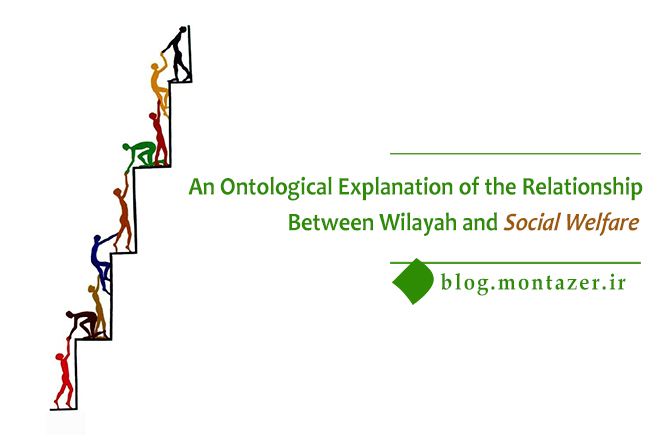
Material Progress Has Reached a Dead End without Wilayah
Imagine living in a modern metropolis equipped with advanced drip-irrigation systems, smart vertical farms, and fully automated factories. Medical science has reached remarkable heights, while GDP figures show astonishing growth. Yet beneath these technological towers, suicide rates soar, class divisions widen, and a growing sense of meaninglessness spreads among citizens.
This is not merely an imagined scenario; it reflects realities found, to varying degrees, in many modern societies. Why, despite solving technical problems and gaining access to wealth-generating tools, do modern societies still struggle with fundamental crises such as chronic poverty and systemic discrimination? This question calls for a structural reconsideration of the concept of progress: Is prosperity merely the product of tools, or does it require a fundamental guiding principle that gives existence direction?
Dissecting the Concept of Progress in the Absence of an Ultimate Purpose
Progress in economics, science, industry, and agriculture essentially means expanding humanity’s material capabilities. Science and industry are “neutral” tools: They increase human power but do not necessarily determine its direction.
When such progress occurs without a complete and perfect human role model, society experiences “instrumental inflation.” Humanity possesses the means to generate wealth, but without a guiding connection to Wilayah, wealth flows through improper channels. Instead of eradicating poverty, it concentrates capital in the hands of a few, thereby widening the class divide. Therefore, the first logical argument is that material progress is not a sufficient condition for achieving bliss.
The civilizational problems of the contemporary world go beyond technical challenges. Poverty, corruption, and discrimination arise more from a “crisis of human management” and the “absence of a just model” than from a lack of resources. In this context, introducing Imam Mahdi (Peace be upon him) to others is not merely an individual religious act; it means identifying the central axis for regulating social relations.
Without this axis, even the most advanced scientific and agricultural processes cannot ensure fair distribution. Imam Mahdi (Peace be upon him), as the intermediary of divine grace and embodiment of absolute justice, directs human structures from oppression and selfishness toward self-sacrifice and loyalty, leading from corruption to falah (multi-dimensional prosperity).
Analyzing the Crisis in Advanced Societies: Proof by Contradiction
To prove that material progress alone cannot bring salvation, one can examine developed societies. These societies have maximized material factors such as science, industry, and wealth. Yet their systems continue to reproduce poverty and inequality.
This reality reveals a “missing link” in civilization: the presence and rule of the Imam in human life. Without a society’s direction being based on “loyalty and movement along the Mahdavi path,” advanced scientific tools become instruments for reinforcing discrimination rather than removing social problems. Therefore, the Mahdavi model of development emerges as the solution for overcoming modernity’s dead ends.
Civilizational Decay: Poverty, Corruption, and Discrimination
Ayatollah Khamenei emphasized three fundamental civilizational afflictions: “poverty, corruption, and discrimination.” From an ontological perspective, these are the consequences of distancing from the perfect human role model.
Poverty: The result of unjust distribution away from divine principles.
Corruption: The outcome of leaving the Straight Path and lacking inner oversight rooted in Wilayah.
Discrimination: The result of prioritizing personal interests over collective interests without a monotheistic view.
Until society recognizes the necessity of the Mahdavi movement, these problems will continue to be reproduced. In fact, resolving these issues requires a profound ma’rifa-based revolution, one that acknowledges the Imam as the guiding force and overseer of how our social systems are built. Only through the Mahdavi paradigm of progress can structures be established that automatically prevent the emergence of corruption and discrimination.
Mahdavi Loyalty: The Key to Changing Social Behavior
Loyalty means aligning individual human wills with the overarching divine will. Without this alignment, regardless of technological progress, people will continue to interact according to the principle of “survival of the fittest.”
Following the Mahdavi path transforms the logic governing the economy and society from “profit-centeredness” to “justice-centeredness.” This shift addresses crises such as environmental destruction caused by excessive industrialization and poverty resulting from capitalism. The Mahdavi model of development is therefore an immediate necessity for the survival of human civilization.
The Relationship Between Mahdism and Welfare in Everyday Life
All the roles and signs of the Imam’s presence in society discussed above are developments that will occur after his Advent. More importantly, the prerequisite for the Advent of Imam Mahdi (Peace be upon him) is for society to reach a minimum level of solidarity and loyalty. The Advent can only be realized by a society whose members understand their relationship with the Imam and properly fulfill their roles.
Even prior to the Imam’s collective Advent, such a society stands to benefit from his presence in governing and harmonizing the four lower dimensions of human existence. Following his glorious reappearance, it will further flourish through spiritual refinement and the attainment of perfection under the guidance of the Infallible Expert.
We must bear in mind that attaining balance and true welfare is only one of the secondary blessings of the Advent of Imam Mahdi (Peace be upon him). The fundamental issue is for human beings to understand and recognize themselves according to their true worth and value.
Ultimately, the problems of the world do not have merely “partial solutions.” Poverty cannot be eradicated simply through tax reform or advances in agricultural technology. These problems stem from a single cause: “humanity’s separation from the source of divine guidance.”
As long as the Imam of the Time is not recognized as the compass of human progress, scientific advances will only make crises more complex. Therefore, the only way out of this “plague” is to return to the path of Wilayah and implement the Mahdavi progress model at all levels of governance and individual life.
Three fundamental steps are required to eradicate poverty and discrimination:
- Increasing Ma’rifa: Introducing the Imam as the only true solution to civilizational problems.
- Institution-Building: Developing strategic policies and economic plans based on striving for the Imam’s Advent.
- Social Advocacy: Creating a social movement to eliminate the plagues of corruption and discrimination based on Mahdavi criteria.
These three steps form the foundation of the Mahdavi model of development. Without them, efforts to improve society will remain temporary and ultimately fail.
Humanity today stands at a historical turning point. Despite reaching peaks of material progress, it has also fallen into deep valleys of poverty and injustice. Salvation lies not in returning to the past, but in moving forward under divine direction.
Knowing the Imam of the Time and committing to Mahdavi loyalty can transform industry, science, and economics from instruments of destruction and exploitation into tools for building a world of bliss and welfare. Pursuing the Mahdavi paradigm of progress is the only guarantee for permanently eliminating poverty, corruption, and discrimination.
For any society to achieve true, lasting well-being, it needs to operate within the framework of Wilayah. This Mahdavi progress paradigm is not just an imagined utopia; it is a vital necessity that has emerged from the consistent failures of purely materialistic civilizations. Thus, thinkers and social reformers must clarify this relationship and develop practical ways to connect modern progress with authentic principles of Wilayah. In this framework, the Mahdavi model of development means the comprehensive elevation of humanity under the guidance of the Infallible.
Comments and questions
Ask a question or share your experience with this lesson.
After signing in and enrolling, you can join the discussion.
Be the first to ask a question about this lesson.