
Architectures of Faith: The Mosaic Foundations of a Divine Civilization
Understanding the nature of a divine civilization and identifying its structural coordinates within the horizon of the End Times requires a profound rereading of the biography of the “Ulul-Azm” prophets—those who, armed with scriptures and laws, bore the critical mission of establishing social orders and guiding humanity toward the ultimate purpose of existence. The chronicle of Moses is laden with historical turning points, formative tribulations, and profound miracles that not only illuminate the path toward the formation of the Ummah (a community that follows the same leader and Imam), but serve as a comprehensive blueprint for activists and architects of a modern divine civilization. Achieving a robust analysis of this divine prophet’s role in civilization-building necessitates a systematic examination of his life’s key events, the foundations of his law, heavenly books and tablets, and the ontological and nation-building lessons drawn from his engagement with the transformations of his era.
Turning Points and Architectural Facets of Civilization in the Age of Moses
When the era of oppression and enslavement of the Israelites under the Pharaohs peaked and their endurance broke, they all gathered in distress, asking for urgent prayer (Istighatha) [1] and crying out for help before God for forty days. The sincerity of this supplication prompted the Lord to forgive the remaining one hundred and seventy years of torment and to commission Moses for their deliverance.
Secret Birth and Divine Decree in the Court of Pharaoh
Prior to the birth of Moses, Pharaoh had ordered the massacre of all newborn Israelite boys, acting upon prophecies regarding a savior who would rise from among the Israelites to overthrow the tyrant’s throne. Amidst this suffocating atmosphere, Moses was born in secret and kept in hiding for three months. Following a divine command to entrust the infant to the waters with a promise of his return, his mother placed him in a chest on the Nile. The current guided the chest to Pharaoh’s palace; as the infant’s innocence touched the heart of Asiya, Pharaoh’s wife, he was adopted as a prince. The child’s refusal of palace wet nurses led to his true mother entering the palace incognito, thereby fulfilling the divine promise. Thus, he was nurtured at the very epicenter of Pharaoh’s power, ensuring that, through subsequent events, the preconditions for grand, civilization-building migrations were established.
Flight to Midian and the Era of Training and Ten-Year Residency
The preparation for his mission accelerated following a pivotal event in Egypt that can be mentioned as one of the institutional foundations of civilization under Moses; while defending an oppressed Israelite against the injustice of a Copt, Moses unintentionally struck the Egyptian, resulting in his death. Following an arrest warrant issued by Pharaoh’s court, he was forced to migrate to the land of Midian, located in the northwest of the Arabian Peninsula. He married the daughter of Jethro [2] and resided in that region for ten years. This decade provided a vital foundation for self-purification, the strengthening of patience, endurance, and responsibility, and the deepening of reflection and worship. Through exposure to different tribes and cultures, he acquired a broader global perspective, allowing his soul to attain the full capacity and readiness required to accept the weighty mission of prophethood.
Mount Tur: Divine Speech and the Call to Prophethood (Kalim Allah)
While returning from Midian to Egypt with his pregnant wife, Moses traveled via secondary routes for security reasons. Amidst a storm and the biting cold, they lost their way just as his wife went into labor. At the height of this material need and distress, a light appeared from the direction of Mount Tur. As Moses approached the flame glowing from the green branch of a tree, the divine call emerged: “Indeed I am your Lord! So take off your sandals. You are indeed in the sacred valley of Tuwa” [3].
In this Divine Appointment, he was granted the miracles of transforming his staff into a manifest serpent [4] and the “Bright Hand” [5] (Yad al-Bayda’) and, upon his request, his brother Aaron was appointed as his minister and deputy. There are various perspectives regarding how the Creator spoke to “Kalimullah” (the One who conversed with God). Some scholars consider it a direct, unmediated encounter beyond sensory perception; others suggest it was the manifestation of speech through a specific physical object; and a third group posits that the sound and speech were directly created by God and heard by the Prophet.
Messenger of Divine Oneness
The Almighty sent Moses, along with his brother Aaron, to guide the Pharaoh and his people; however, the Pharaoh refused [6] to believe and instead inflicted great hardships upon the Israelites. The struggle of Moses against the sorcerers [7], the transformation of Egyptian water sources into blood [8], and the plague of insects [9] are among the most renowned of these events. Finally, following the repeated obstinacy of the army of the Pharaoh, Moses was commanded to lead the Israelites out of Egypt by night. During this great migration—a pivotal moment in the civilizational dynamics of the era of Moses—one of his greatest miracles occurred: the parting of the sea [10] and the drowning of the Pharaoh’s army. Ultimately, the Israelites were saved from the army of the Pharaoh and entered a new land.
The Forty-Day Retreat of Moses and the Sedition of the Golden Calf
Moses appointed Aaron as his successor among his people and departed for the Divine Appointment on Mount Tur to receive Sharia and divine tablets. The initial appointment was thirty nights, which was completed with ten more [11], elevating it to the Forty-Night Divine Appointment or the Forty-Day Devotional Retreat of Moses (Chillah-ye Kalimiyyah) [12]. As the absence lengthened, demons and hypocrites spread rumors of his death. An individual named Samiri, relying on the tribe’s intellectual residue and the symbolic sanctity of the cow in ancient Egypt, fashioned a golden calf that emitted an animal-like sound when wind blew through its structure [13]. The Torah attributes the creation of this idol to Aaron [14], but the Holy Quran identifies it as the handiwork of Samiri [15]. The absence of the divine leader and the failure to follow the infallible successor precipitated the fall of the Israelites into the abyss of calf-worship [16]. Upon his return, observing this apostasy and ideological deviation, Moses severely reproached Aaron and openly rebuked the people, cast the tablets to the ground, punished Samiri, burned the golden idol, and cast its ashes into the sea [17].
Exodus from Egypt and the 40-Year Trial in the Desert of Tih
Following the miracle of parting the Red Sea and saving his followers from the Pharaoh’s pursuit, the Israelites entered the Sinai Desert (located in northeastern Egypt), a dry and arid region of sand dunes known as the Desert of Tih. This valley represents both a challenging geography and a historical state of suspension and retribution. Upon their rescue, rather than expressing gratitude and obedience, the Israelites turned to ingratitude. God had promised that entry into and sovereignty over the Holy Land of Jerusalem was contingent upon jihad against the tyrants and despots ruling the region; yet, out of fear and cowardice, the Israelites refused to fight, telling their Prophet: “You and your Lord go and fight” [18]. They even regretted their migration, harboring desires to return to the humiliation of Egypt.
This deviation led to the divine decree that they would wander in the Desert of Tih for forty years, so that the weary and fearful generation could be purged and a new, faithful generation could be raised. During this period, miraculous events occurred, such as the gushing of twelve springs [19] from rock, the shading clouds [20], the descent of Manna and Salwa [21], and the miraculous placement of Mount Tur over their heads [22].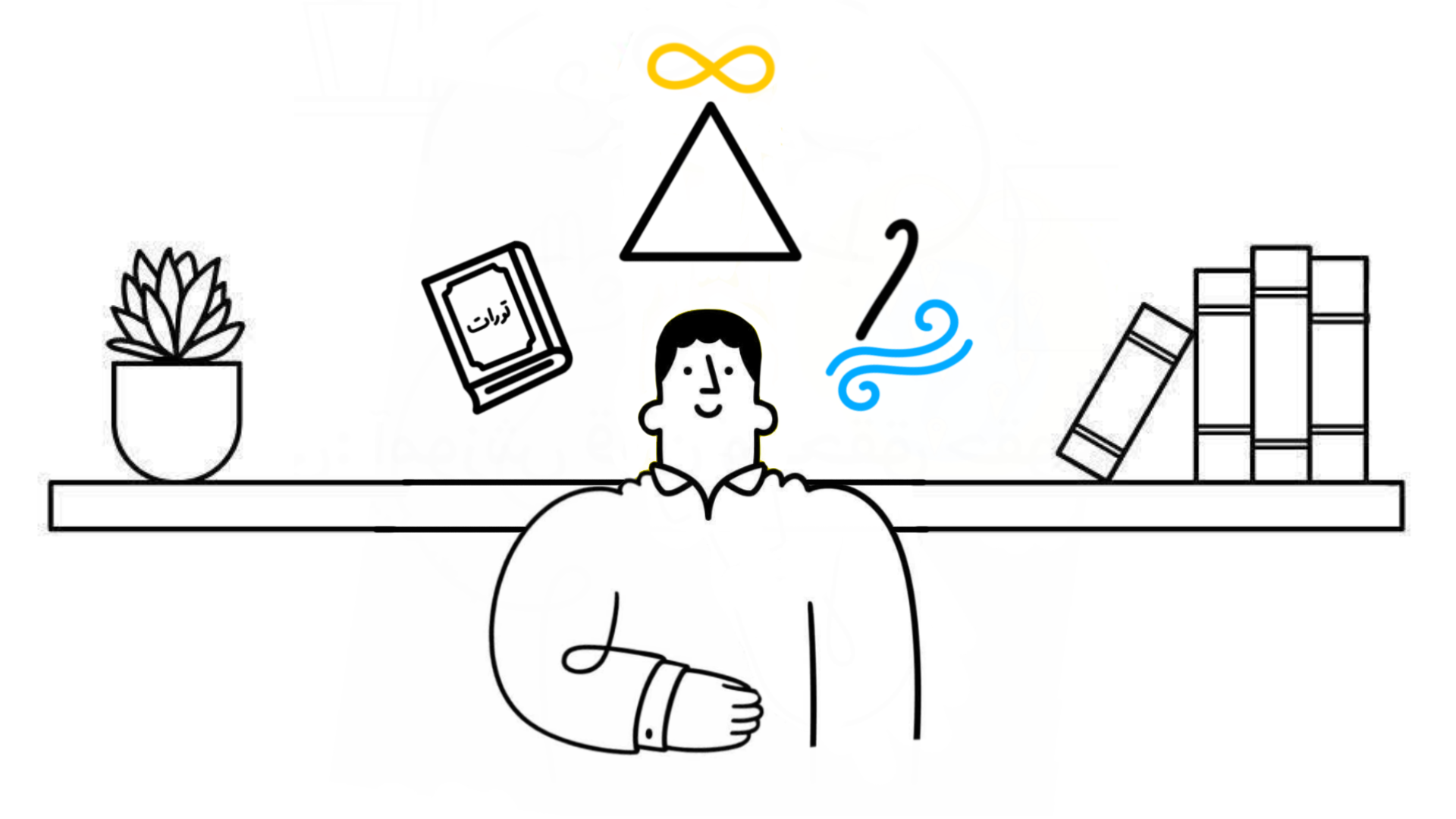
The Pillars of the Mosaic Law and the Structure of Jewish Holy Books
One of the other civilizational mandates of the Mosaic epoch is his Sharia. The Sharia of Moses was a guiding and moderate structure, relying entirely on the principle of monotheism, the negation of any form of polytheism and idol worship, and the avoidance of sin. As a document for managing the individual and society, this law comprised three fundamental sections:
- Ritual Laws: prayer, fasting, the tradition of sacrifice, and pilgrimage to the temple (which later became Bayt al-Maqdis).
- Social Laws: Regulating the frameworks of marriage, divorce, financial relations and trade, the system of inheritance, and the limits of interpersonal interactions.
- Judicial Laws: criminal laws, the investigation of crimes, and the execution of punishments (such as the death penalty for apostates and calf-worshipers).
The fundamental pillars of this law included firm faith in the afterlife, the negation of division and the preservation of unity, the explicit establishment of religion, the performing of worship and prayer, and the immutable principle of “jihad against oppressors and tyrants” to liberate the oppressed.
Regarding the scope of Moses’ mission, there are two perspectives:
The first view considers this law limited and exclusive to the Israelites, citing the appearance of certain Quranic verses [23] and prophetic hadiths that describe previous prophets as commissioned for their own people, while characterizing the mission of the last Prophet as universal [24].
The second view (the comprehensive theory of Allamah Tabatabai), relying on the mission of all Ulul-Azm prophets (Arch-Prophets), considers the religion of Moses to be universal and views actions such as his effort to guide the Pharaoh and the conversion of the Egyptian sorcerers as clear evidence of the general scope of his call.
Regardless of these two views, the ontological truth of religions confirms that the temporal validity of any law is limited to its own historical period prior to the mission of the next law-bringing prophet; with the emergence of a new messenger, obedience to the new law becomes obligatory, and past rulings are abrogated.
Sacred Jewish Texts and Sources
The Torah: As the oldest codified heavenly book among the Abrahamic traditions, the Torah is frequently referred to as the “Law of Moses.” Within the Jewish tradition, it is structured into five fundamental sections known as the Pentateuch:
- Genesis: It chronicles the creation of the universe, the origins of humanity, and the lineages of the primordial prophets.
- Exodus: It documents the history of Israelite enslavement in Egypt and their miraculous liberation.
- Leviticus: It encompasses Jewish laws, rituals, and devotional traditions.
- Numbers: It details the historical transitions from Egypt toward Jerusalem, including the period of wandering in the Sinai desert.
- Deuteronomy: It serves as a compendium for the repetition, re-explanation, and reinforcement of the divine laws and commandments.
From an Islamic theological perspective, while the original Torah was a direct divine revelation, the current textual version is distorted by scribes and rabbis over the centuries [25]. This is particularly noted in passages that originally contained the glad tidings regarding the advent of the final Prophet.
The Tablets of Moses: These represent the written revelations granted to Moses upon Mount Tur. They contain the core ethical and theological principles—often identified as the Ten Commandments—which include the absolute necessity of monotheism and the negation of idolatry; the prohibition of false oaths; and the mandates to abstain from murder, adultery, theft, and falsehood. Furthermore, they emphasize the honoring of parents and the respect for the property and moral boundaries of others. Scholarly debate persists regarding the exact relationship between these Tablets and the Pentateuch, as well as their specific number and physical composition.
The Talmud (Oral Torah): It is an extensive, multi-volume encyclopedia of Jewish law, tradition, and rabbinic discourse developed over many centuries. It is comprised of two primary components: The Mishnah (the core legal text addressing thousands of judicial and social issues) and the Gemara (the expansive commentary and supplementary analysis of the Mishnah). While Jewish tradition asserts that the Talmud represents an “Oral Torah” descended from Mount Tur and credits it with the historical survival of the faith, Islamic scholarship and critical historical analysis categorize it as a man-made, non-divine text. In this view, inherent authority is reserved exclusively for the original Torah revealed to the Prophet of God.
Traditions, Factors, and Institutional Foundations of Civilization under Moses
The life of Prophet Moses transcends mere historical narrative; it constitutes a comprehensive paradigm of the equations and laws governing the “becoming” of monotheistic societies. Extracting the civilizational principles from his conduct reveals the following foundational dimensions:
- Distress and Cry Out for Help as the Prerequisite for Deliverance and the Advent of the Savior: Divine law dictates that until the faithful masses attain a profound realization of distress, and earnestly implore the necessity of divine governance, the grounds for divine assistance and the dispatch of a savior will not be established. The supplication and crying for help of the Israelites, which led to the remission of 170 years of trial and tribulation, serves as a canonical exemplar of this principle [26].
- The Fundamental Necessity of Divine, Infallible, and Expert Leadership: An Ummah without an infallible leader tied to divine revelation—one who understands the architecture of the soul, holds the keys to worldly and eternal bliss, and governs free from human whim—remains powerless against the conspiracies of jinn, human devils, and Pharaonic tyrannies.
- The Vital Role of Obedience and Mass Allegiance to Wilayah (Leadership): The mere presence of an infallible leader does not guarantee the salvation of society. A divine civilization is forged upon the twin wings of a “wise leader” and “obedient‚ humble, and striving followers.” The Israelites’ disobedience regarding jihad and the sedition of the Samiri demonstrate that laxity in obedience and weakness of faith inevitably lead to wandering and spiritual descent.
- Sharia-Centricity and the Establishment of a System of Divine Commandments: The creation of civilization is impossible without boundaries, laws, and codified regulations decreed by the Creator and expounded by His Messenger. The Sharia of Moses laid the foundation for structural order and the formation of the Ummah.
- Patience and Perseverance in Civilizational Trials: The lifestyle of civilization-builders fundamentally differs from that of ordinary people immersed in animalistic subsistence. The establishment of truth necessitates overcoming financial and physical tribulations, wandering, and severe trials of faith, so that the purity and sincerity of souls may be revealed and consecrated.
- Purity of Soul, Self-Purification, and Taqwa (God-Consciousness): Pursuit of a righteous society requires purging vices and adorning oneself with divine attributes and names. Hearts polluted and devoid of Taqwa will not endure the fierce onslaught of seditions; they will inevitably drop out of the civilizational cycle.
- Multi-Layered Migration and the Organization of Priorities: The Prophet’s successive migrations—from Egypt to Midian, from Midian back to Egypt, and the exodus toward the Holy Land—demonstrate that civilization-building is contingent upon both physical and spiritual migration: a deliberate detachment from worldly attachments, habits, and base affections, enabling the absolute prioritization of divine command and striving in the way of God (Jihad).
- The Divine Law of Unseen Assistance Through Human Endeavor: A divine civilization is constructed not upon passive reliance on miracles, but upon the unrelenting struggle and perseverance of the masses. When the faithful demonstrate their standard of sincerity and steadfastness in the arena of practice, astonishing triumphs and unseen miracles descend under the leadership of God’s deputy.
These eight principles, drawn from the conduct of Moses, collectively propose a systematic methodology for the formation of a divinely guided society—one whose applicability extends beyond historical Israel to the perennial project of monotheistic community building.
References
[1] . Quran 8:9.
[2] . Exodus 18.
[3] . Quran 20:12.
[4] . Ibid., 7:107.
[5] . Ibid., 27:12.
[6] . Ibid., 23:45-47.
[7] . Ibid., 26:45.
[8] . Exodus 7:17-25; Ali Ibne Ibrahim Qummi, Tafsir Qummi. Translated by Sayyid Athar Hussain S.H. Rizvi. vol. 2, p. 195.
[9] . Quran, 7:133; Naser Makarem Shirazi, Tafsir Nemooneh. Tehran: Dar Al Kutub Al Islamiyah (1995): vol. 6, p. 322; Exodus 8:1-15.
[10] . Exodus 12:37; 14:6-8; 14:21-22; Quran, 26:60; 26:63-65.
[11] . Quran 7:142.
[12] . Ibid., 7:143.
[13] . Ibid., 20:85-88.
[14] . Exodus 32:4.
[15] . Quran 20:90.
[16] . Ibid., 20:91.
[17] . Exodus 32: 19.
[18] . Quran 5:24.
[19] . Ibid., 7:160; 2:60; Exodus 17:6.
[20] . Quran 2:57.
[21] . Ibid.
[22] . Ibid., 2:63; Sayyid Kamal Faghih Imani, An Enlightening Commentary into the Light of the Holy Qu’ran. Translated by Sayyid Abbas Sadr- ‘ameli. vol 1‚ p 146.
[23] . Quran, 34:28; 21:107; 7:158, 59, 65.
[24] . M. Mohammadi Rayshahri, The Scale of Wisdom: A Compendium of Shi’a Hadith, Trans. N. Virjee A. Kadhim, M. Dasht Bozorgi, Z. Alsalami and A. Virjee, vol 4. No. 6038.
[25] . Quran 4:46.
[26] . Sayyid Muhammad Taqi Musawi Isfahani, Mikyal al-Makarim fi Fawa’id al-Du’a li’l-Qa’im‚ trans. Yasin T. Al-Jibouri (Qom: Jamkaran Mosque Publications, 2007), vol. 1, sec. 22.
Comments and questions
Ask a question or share your experience with this lesson.
After signing in and enrolling, you can join the discussion.
Be the first to ask a question about this lesson.