
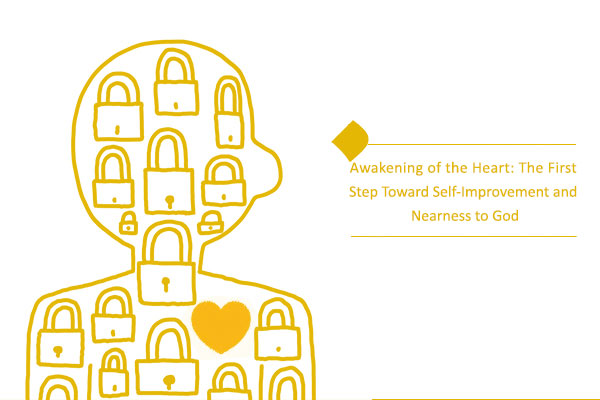
Is It Possible to Start the Journey of Self-Knowledge without Yaqza or Awakening of the Heart?
For many of us, life is filled with the hustle and bustle of everyday life, work, financial and family concerns, as well as minor and major successes and failures. However, here a fundamental question arises: Is the truth of life all about this ceaseless flow, or is there a hidden layer that we rarely pay attention to?
Amidst these preoccupations, we often forget why we were born and what the primary purpose of creation is. It is precisely this self-forgetting that highlights the need for Yaqza or awakening of the heart: the very moment a person awakens from negligence and looks at themselves and the journey of life with a fresh perspective.
Inner awakening should not be equated with self-awareness in modern psychology. The contemporary psychology primarily focuses on managing emotions, behaviors, and social relationships, whereas Yaqza signifies the heart’s return to its eternal and divine truth. Modern styles of life—such as consumerism, drowning in social media, or the endless race for fame and wealth— hinder the heart from this return, trapping humans in the most superficial layers of existence.
This spiritual awakening is similar to a familiar experience: waking up in the middle of the night! In our dreams, we take seriously the things we see; we feel fear, laugh, or cry. However, as soon as we wake up, we realize that all those states were merely fleeting dreams. Many worldly concerns and attachments are just like this; outwardly, they seem important and thrilling, but an awakened heart finds that they hold no true essence of life.
Yaqza or awakening of the heart shifts a person’s perspective from a purely material and animalistic level to a human and eternal horizon. Someone who considers themselves merely a physical being only make plans for taking fleeting pleasures or overcoming transient fears. However, an awakened heart understands that the truth of existence goes far beyond the human being’s limited dimensions, and one must align their choices with their eternal destiny.
For this reason, great figures of religion and the wisest people in the world have emphasized that any movement toward self-improvement begins from this very point. As long as a person remains in the slumber of negligence, they cannot recognize their path, just as a sleeping person cannot determine the destination of their journey. Therefore, inner awakening is the first step toward breaking free from the captivity of lower existential dimensions, connecting with the true self, and embarking on a path that brings a person closer to the purpose of creation and nearness to God.

The Definition and Essence of Yaqza or Awakening of the Heart
From the perspective of eminent ethicists, spiritual awakening is the first step on the path of self-improvement and the starting point for all the stages of human self-growth. As long as we live in negligence, our life is like a dream where unreal images seem real. Just as a person who dreams that they laugh, fear, feel sorrow, believing that what they dream is reality, we too consider the fleeting attachments of this world to be real and our ultimate goal. However, when the heart awakens, we realize that these attachments were nothing more than a mirage. As the Prophet (Peace be upon him and his family) says, “People are asleep, and when they die, they awaken” [1].
-The Truth of Yaqza
Yaqza or awakening of the heart happens at the very moment the heart is stirred, and a new truth is revealed to us. In this case, we do not define ourselves by our physical body, gender, or social status. Instead, we realize that the truth of our existence is eternal and life is not confined to the short years we live in this world. This shift in perspective may seem simple, but it creates a fundamental transformation in the human soul. This is because we will never feel the need for genuine growth and the movement toward perfection, until we do not reach the awareness that our existence transcends the physical body and the animal self.
-The Connection Between Existential Dimensions of the Human Being and the Awakening of the Heart
Humans are multidimensional beings. Our bodies are formed from material elements; they grow, use food, and have an innate drive for survival and seeking pleasures. However, the true essence of a human being is not limited to these dimensions. Our primary existential dimension is the human and supra-rational one, where the Divine Spirit has been breathed into us [2]. The problem arises when many people define their identities according to these lower existential levels: their body and beauty, sexual instincts, academic degrees, fame, or social status. Under such conditions, the heart is asleep and remains oblivious to its truth.
Yaqza or awakening of the heart means breaking free from this slumber of negligence and attaining the awareness that the core and truth of our existence is its divine and eternal dimension. For instance, someone who equates their worth solely with their physical appearance will feel worthless at the slightest bodily change. This is a sign of neglecting the truth of existence. But with inner awakening, we realize that our true worth goes far beyond our transient physical appearance and is rooted in our eternal soul. Such an understanding marks the beginning of self-knowledge and the journey toward perfection.
–Yaqza: The Boundary Between Negligence and Awareness
Yaqza or awakening of the heart is the first step and a pivotal turning point on the path to perfection. This awakening serves as the boundary between negligence and awareness, drawing a person’s attention to their eternal truth. Spiritual awakening changes one’s perspective on life and aligns their priorities based on eternity. Without Yaqza, a person remains captive of their lower dimensions. They are just religious on the surface and perform the acts of worship superficially. But with inner awakening, the first step in the spiritual journey is taken, and the path to nearness to God is opened.
-The Difference Between Yaqza and Self-Awareness in Modern Psychology
In modern psychology, self-awareness refers to an individual’s attention to their own feelings, strong emotions, and thoughts, with the goal of reducing anxiety, managing anger, or improving social relationships. While this understanding is valuable, it remains confined to the level of human strong emotions and external expressions.
In contrast, Yaqza or awakening of the heart is not merely the management of strong emotions; rather, it is focusing on the eternal truth of existence and one’s connection with God. A person who reaches this status realizes that their existence transcends both body and mind, and in fact, is a mirror of the Divine Spirit. For example, psychology might teach an individual to use relaxation techniques to release anger, whereas Yaqza reveals that the root of anger lies in forgetting the remembrance of God and being enslaved by the animal self. Its true remedy is only re-focusing on our divine dimension. Therefore, Yaqza is far deeper and more profound than self-awareness in modern psychology because its ultimate goal is not merely mental wellness, but moving toward nearness to God.
Negligence Versus the Awakening of the Heart
Inner awakening is the exact opposite of negligence. Negligence means being preoccupied over trivial things and engrossed with the lower dimensions of existence, to the extent that one forgets the eternal truth of their existence. A person living in negligence devotes all their care and energy to get wealth, status, fame, or to enjoy fleeting amusements, mistakenly believing that life revolves only around these things. Such an individual may appear awake on the surface, but in reality, they are plunged into a deep sleep.
The Holy Quran has repeatedly introduced negligence as a grave danger. Regarding negligence, it says: “Indeed, We have destined many jinn and humans for Hell. They have hearts they do not understand with, eyes they do not see with, and ears they do not hear with. They are like cattle. In fact, they are even less guided! Such [people] are [entirely] negligent” [3]. From the Quranic perspective, the primary root of negligence is nothing other than forgetting one’s connection with God [4]. When this connection is severed, a person forgets even the truth of themselves, remaining trapped in the most superficial layers of existence.
Negligence can be likened to a night’s sleep. In a dream, scenes and nightmares appear incredibly real, but upon waking, everything fades away. In the life of a negligent person, joys and fears outwardly appear genuine, but with spiritual awakening, it becomes clear that these are entirely transient and yield nothing but ultimate regret. In contrast, Yaqza happens at the exact moment when a person realizes that wealth, fame, and status are like a fleeting shadow, and that the eternal truth of their existence has a far higher value and status.
Thus, negligence means living in the slumber of material and animal dimensions, while the awakening of the heart is focusing on the supra-rational and divine dimension—a dimension that forms the foundation of a person’s true identity and guides them toward their ultimate destination, which is nearness to God.
-Obstacles to Yaqza in Modern Lifestyles
Many modern lifestyles act as barriers to spiritual awakening. Endless consumerism, digital entertainment, social media addiction in its excessive way, fierce career competition, and an overemphasis on physical appearance and fame are all factors that preoccupy the heart, keeping it anchored to animal and social levels.
This type of lifestyle traps humans in constant negligence, stripping them of the opportunity to contemplate their eternal truth. The Quran warns about this very issue: “Competition for more [gains] diverts you [from Allah]” [5]. The endless race for possessing more distracts humans from remembering their ultimate destination. For example, a person who spends hours on social media chasing likes and followers seeks to find their self-worth through the eyes of others, leaving no room to focus on their inner self and eternal purpose.
This situation represents one of the most significant obstacles to the awakening of the heart in the contemporary world. Breaking free from these negligence-inducing lifestyles is the primary prerequisite for attaining Yaqza. Only then can the journey of self-improvement begin, allowing us to reach our existential truth and, ultimately, nearness to God.
The Effects and Fruits of Yaqza in Human Life
Yaqza or awakening of the heart is the starting point of the path to genuine self-improvement and the foundation of a healthy lifestyle. When a person awakens from the slumber of negligence, their perspective on the world and themselves changes. They no longer see themselves as a being who lives just for seeking fleeting pleasures like eating, or the race for fame and status; instead, they realize that the truth of existence lies in the human and supra-rational dimension.
Inner awakening yields numerous fruits, some of which are highlighted below:
-Knowing and Believing in Eternity
When we consider ourselves to be mortal, it is only natural that we put all our energy into our short life in this world. However, when Yaqza happens, we believe in eternity. This very awareness shifts our priorities, propelling us toward continuous and spiritual self-improvement.
-Discovering the Heart as the True Asset
A negligent individual views their primary asset as their material possessions, social status, or physical beauty. In contrast, inner awakening makes clear that a person’s true asset is their heart. An awakened and sound heart becomes the wellspring of peace, love, and purification. In this state, instead of drowning in greed, jealousy, and useless competitions, a person values inner growth and lasting tranquility.
-Illuminating the Path and Destination of Life
Someone who is asleep knows neither where they are nor where they should go. The awakening of the heart is like a torch on a dark path, revealing the ultimate destination, which is nearness to God. Ethicists have emphasized that all spiritual status—from repentance and spiritual struggle to reliance on God and divine love—begin after Yaqza. Like a traveler who oversleeps and, though they may busy themselves at the station, will never reach their destination. The true spiritual journey can only begin with spiritual awakening.
-Rebuilding One’s Lifestyle
Yaqza is not merely an old moral or mystical concept; it is a vital necessity for modern humans. Many contemporary mental health crises, such as anxiety, the feeling of emptiness, and depression, are rooted in negligence. If modern lifestyles are not changed, they will be the greatest barrier to inner awakening. Therefore, in practice, Yaqza means rebuilding one’s lifestyle and aligning it with eternal truth—a path that leads humans to nearness to God and true flourishing.
In conclusion, just as the physical body cannot move unless it wakes up, the soul will never reach its divine destination without spiritual awakening. Yaqza is the first step toward breaking free from negligence, initiating self-knowledge, and moving toward perfection.
How much do you believe in the necessity of Yaqza or awakening of the heart? In your opinion, what practical strategies can liberate a person from negligence-inducing lifestyles and lead them to the spiritual awakening? Please share your experiences and perspectives with us.
References
[1]. Ibn Maytham al-Bahrani, Sharh al-sad kalimeh-ye qisar, 54.
[2]. Quran, 38:72
[3]. Quran, 7:179
[4]. Quran, 59:19
[5]. Quran, 102:1