

What Is Life in the Barzakh Like? Why Is Knowledge of Life in the Barzakh Important?
All human beings will experience death, but its truth remains shrouded in mystery for many. Some view death as the end of everything, while others see it as the beginning of a new journey. If we are to be realistic, death is the end of the soul’s connection with the material body. After death, human life continues in another realm called the Barzakh, with a different form and quality.
Life in the Barzakh is an independent stage, yet it is a continuation of worldly life. Just as a fetus grows in the limited space of the mother’s womb before entering a vaster world, after death, a person is freed from the limitations of the body and worldly time, entering a different and more expansive domain. This realm is difficult to comprehend for someone who is still living in this world, but it is imaginable.
We have experienced small instances of this truth many times; the clearest example is sleep. In sleep, our eyes are closed and our body is motionless, yet we see, hear, feel, and even experience movement or flight. This simple example shows that there is a dimension in us that transcends the material body. Death, or wafat, is nothing more than the complete transfer of this dimension and the beginning of life in the Barzakh.
The important point is that life in the Barzakh is neither a vague dream nor an absolute cessation. According to the verses of the Quran, there is a stage between death and the Day of Judgment where the person remains alive and conscious
[1]. In this stage, the soul still experiences need, pleasure, and pain, but in a form that is different from the material and limited worldly existence. What a person sows and stores in this world manifests itself in the Barzakh as the conditions of their life. Therefore, life in the Barzakh is accompanied by peace and happiness for some, and is full of torment and regret for others.
When we understand that our life is not limited to a few decades of presence in this world, and that it continues after death in a real stage with more precise and expansive conditions and opportunities, our view of worldly life will change. Knowing this stage both reduces the fear of death and gives new order and direction to our lifestyle and choices.
How Are Consciousness, Perception, Physical Form, and Time Experienced in the Barzakh?
One of the fundamental questions about life in the Barzakh is how a person continues to live after death. In this world, we are accustomed to knowing everything through the material body and sensory tools. But with the disappearance of this body, does perception and experience end? Or, as religious teachings suggest, does life in the Barzakh continue with new perception and a suitable body?
- Consciousness and Perception in the Barzakh
The Holy Quran says regarding the martyrs: “Think not of those who are slain in Allah’s way as dead. Nay, they live, finding their sustenance in the presence of their Lord” [2]. This verse indicates that life in the Barzakh is accompanied by consciousness, awareness, sustenance, and enjoyment (blessing). Enjoying provision and sustenance is meaningless without perception and consciousness.
Another verse states: “You were heedless of it, and We removed your veil from you, so your sight today is sharp” [3]. This statement shows that after death, perception and consciousness are not lost, but rather, they actually become stronger and clearer.
Sleep is a simple example of this truth. While the material body is motionless, the soul sees, hears, and feels. Therefore, death is like a great awakening that brings a person into a new world and stage where perception and consciousness are clearer and more extensive than in this world.
- The Barzakhi (Facsimile) Body
Another important question about life in the Barzakh is the form of the body. Is the soul formless and fragmented, or does it possess a body that is suitable and harmonious with that realm? Based on religious teachings, the human being appears in the Barzakh with a facsimile body or the Barzakhi Body. This body is neither heavy and material like the worldly one, nor completely abstract and intangible; rather, it is in an intermediate state. This body enables the soul to see, hear, move, and perceive pleasure or pain, and it is compatible with the realm of the Barzakh. After death, the soul continues to live in a real form, which is subtler than the worldly body and appropriate for the Barzakh.
- Time in the Barzakh
The third question concerning life in the Barzakh is the issue of time. In the world, time is measured by the movement of objects and the rotation of day and night. However, in the Barzakh, where worldly matter does not exist, does time disappear? The Quran says regarding the people of Pharaoh: “The Fire; they are exposed to it morning and evening” [4]. This verse indicates that a type of sequence exists in the Barzakh. The person feels the passage of moments; however, this time is not in the form of worldly hours and calendars.
For some, the Barzakh is like a short night that quickly passes, and for others, it is like years full of long and heavy suffering. The intensity of the pleasure or the difficulty of the experience changes the perception of time. Just as joy passes quickly and suffering seems long in this world, the quality of the experience affects the feeling of time passing in the Barzakh as well.
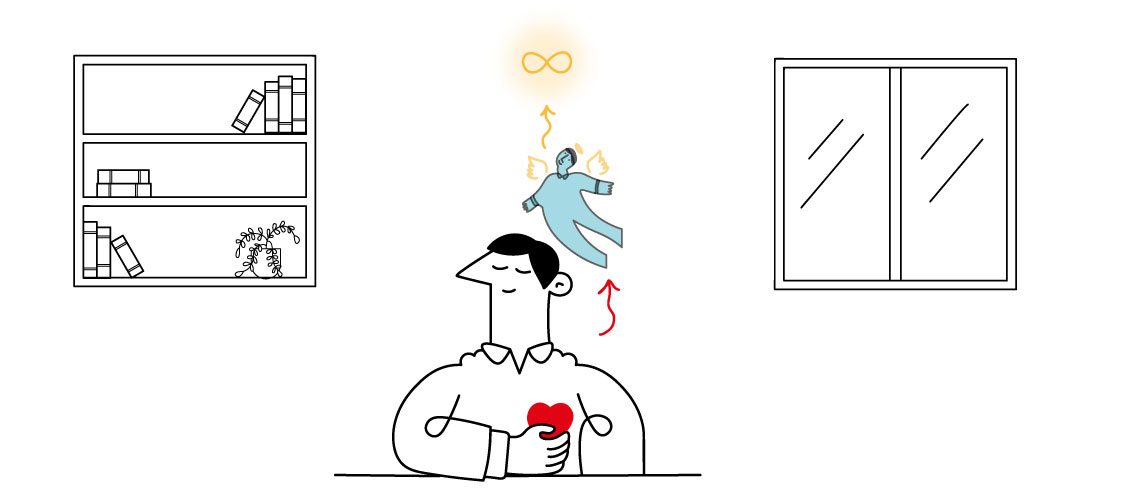
Relationships, Needs, Pleasures, and Suffering in Life in the Barzakh
Life in the Barzakh does not mean being present in a vacuum or in isolation. Rather, it is a realm where the soul encounters various relationships, needs, and emotions. Just as no human being in this world is independent of connecting with others, the same holds true in the Barzakh; the difference is that the form of relationships and needs changes to align with that realm. Understanding this section provides us with a clearer picture of this stage of human life.
- Human Relationships in the Barzakh
Humans are social beings, and this characteristic is not limited to worldly life. The Quran and narrations emphasize that life in the Barzakh is also an arena for connection among souls. The Holy Prophet (Peace be upon him and his family) states: “Souls are like conscripted soldiers; those that recognize each other will unite, and those that do not will differ” [5]. Based on narrations, the souls of believers gather in Wadi al-Salam in the Barzakh and meet and converse with one another. Conversely, the souls of disbelievers come together in places like Barhut [6]. These narrations show that the bond or separation of souls continues after death. Furthermore, the Hadiths mention that the deceased are aware of the condition of their remaining relatives and respond to the greetings of the living. This indicates that the connection between the living people and the deceased souls who have departed to the Barzakh is real.
- Human Needs in the Barzakh
Although life in the Barzakh differs from worldly life, humans still have needs. Their greatest need at this stage is to benefit from divine mercy and tranquility. However, the key fact is that one cannot perform new deeds in the Barzakh.
The Holy Prophet (Peace be upon him and his family) said: “When a man dies, his deeds come to an end except for three things: Sadaqah Jariyah (ongoing charity), a knowledge which is beneficial, or a virtuous descendant who prays for him (for the deceased)” [7]. This narration shows that in the Barzakhi life, only the effects of worldly deeds reach the person, and the prayers and charitable acts of others can also come to their aid. Therefore, the needs of the soul in this realm are met through indirect means.
- Pleasures and Sufferings in the Barzakh
Life in the Barzakh is accompanied by real experiences of pleasure and suffering. Prophet Muhammad (Peace be upon him and his family) said: “Surely a grave is either a garden of the gardens of Heaven or a pit among the pit-holes of Hell Fire” [8]. Based on this, the quality of the soul’s life is determined by its worldly deeds the very moment it enters the Barzakh.
Barzakhi pleasures are mostly described in the form of peace, meeting friends, and benefiting from spiritual blessings. Conversely, Barzakhi sufferings include restriction, anxiety, and being distant from divine mercy. The questioning by the angels, Nakir and Munkar [a], marks the beginning of the human encounter with their own truth. These questions lead to peace for believers and are a source of anxiety and torment for disbelievers.
Regarding the people of Pharaoh and the oppressors, the Quran states: “The Fire; they are exposed to it morning and evening” [9]. This verse indicates that the suffering of some souls in the Barzakh is continuous. In contrast, concerning the martyrs, the Quran states: “They rejoice in the bounty provided by Allah” [10]. These verses indicate that the Barzakhi life is accompanied by joy for one group and torment for another.
Life in the Barzakh is a combination of relationships, needs, pleasures, and sufferings. The souls of believers and disbelievers are each placed in specific groups and stations. The needs of the Barzakhi person are provided by the effects of past deeds and the prayers of their surviving relatives. The pleasures and sufferings are also a direct result of worldly deeds. Therefore, life in the Barzakh is a real and active stage of human existence whose quality depends on our choices and behaviors in this very world.
What is your view on life in the Barzakh? Have you heard any experience, narration, or point that has enlightened your mind? In your opinion, how does paying attention to the Barzakhi life change our perspective on daily life? Share your views, questions, and experiences with us and others in the comments section.
Notes
[a] After a person is buried, two angels visit them in their grave on the first night. Their job is to check the person’s faith and how they lived their life. If the person was a non-believer, the angels look scary and ugly. In this case, they are called Nakir and Munkar. If the person was a believer, the angels look kind and beautiful. Then, they are called Mubashir and Bashir.
References
[1]. Holy Quran, 23:100
[2]. Holy Quran, 3:169
[3]. Holy Quran, 50:22
[4]. Holy Quran, 40:46
[5]. M. Mohammadi Rayshahri, The Scale of Wisdom: A Compendium of Shi’a Hadith. vol. 2, p. 551, hadith 2671.
[6]. Al-Majlisi, Bihar al-anwaar, vol. 27, p. 346.
[7]. Al-Nawawi, Yahya ibn Sharaf. Riyadh al-Salihin (Az Hadith ta Andisheh). Dar al-Hadi, 1383 SH. Book 12, hadith 8.
[8]. Qummi, Ali ibn Ibrahim, Tafsir al-Qummi, vol. 2, p. 94.
[9]. Holy Quran, 40:46
[10]. Holy Quran, 3:170