
Beyond the Illusion of This World: Self-Cultivation and Moral Cancers
Imagine a traveler planning to relocate permanently to a region whose climatic and ecological conditions are completely unknown. If this person were to invest all their time, energy, and resources in furnishing and decorating the train compartment meant to carry them to their destination in only a few hours, any rational observer would question their judgment. Focusing on the appearance of the train car while completely neglecting the requirements of the destination is a clear example of miscalculating the relationship between the journey and the final destination.
Human life in the material world reflects this very situation. While human existence encompasses multiple dimensions and inherently harmonizes with the whole order of creation, human beings remain persistently vulnerable to cognitive errors and excessive reductionism regarding the self. The fundamental issue in this context is the need to redefine the relationship between human beings and eternity and to understand the direct connection between self-cultivation and eternal life. Without properly aligning human perception and relationships with the horizon ahead, worldly life inevitably becomes passive and directionless.
Reductionism and the Need to Reassess Existential Value
Human perception and behavior are constantly influenced by the inclinations associated with the lower levels of existence. By nature, the human being possesses multilayered capacities. However, when the authentic dimension of existence is neglected, the human being descends toward lower inclinations. As outlined in previous discussions, these inclinations can be distinguished and identified across the following four dimensions.
– Inanimate dimension: A tendency toward stillness, the accumulation of material possessions, and remaining confined to the inanimate level of existence.
–Vegetative dimension: Excessive preoccupation with purely material growth, nourishment, and physiological survival.
– Animal dimension: Treating the satisfaction of biological instincts, reproduction, and sensual desires as primary, becoming trapped in superficial competition, social constructs, and the illusion of superiority.
– Intellective dimension: Giving primary importance to acquiring knowledge and seeking to discover the laws governing the universe without considering the true source and origin of the mathematical order underlying creation.
Remaining at these levels confines the human being within the narrow sphere of possessions, clothing, money, knowledge, and outward displays. The fundamental causes of this reductive tendency are two psychological and existential characteristics: profound forgetfulness of one’s true self and ingratitude toward the ultimate value of existence. The explicit statement of the Holy Quran, “Indeed, man is ungrateful” [1], reveals that when the human self is left without guidance and supervision, it can quickly fall into ingratitude for the gift of existence and lose its sense of self.
Accordingly, the first rational requirement for overcoming this reductionism is to establish a coherent system of continuous reminders. Unless everything a person sees, hears, reads, and encounters in social interactions is deliberately arranged in a way that continually reminds them of their true status and dignity, the self will inevitably fall into forgetfulness of the purpose of creation. Continuous reminders are not merely decorative; they are the foundation for maintaining awareness of one’s eternal destiny.
The Human Being’s Harmony with the Entire World of Creation
The human being is not an isolated phenomenon detached from the other levels of creation. Human existence has been structured in such a way that it shares an essential harmony with all dimensions of the created world.
-Material and natural phenomena: from inanimate objects, plants, and animals to sounds, colors, and scents.
-Immaterial and imperceptible phenomena: such as angels and jinn.
-Manifestations of sacred guidance and ma’rifa: including divine scriptures, the prophets of God, and sacred (Qudsi) truths.
This comprehensive harmony demonstrates that the human being encompasses all levels of existence. Every sensory, abstract, and conceptual input evokes a direct response within the human being. In other words, whatever a person receives from the surrounding environment, whether through sight, sound, or behavior, quickly connects with one of the inner dimensions of the soul and strengthens it. If these connections are not directed toward the higher levels, the lower levels will be strengthened and eventually take control of the self.
The Strategic Importance of Self-Cultivation for Eternal Life
If the reality of the immaterial world and the realms after death were to become an inner certainty rather than merely a theoretical concept, the entire structure of human decision-making would change. The events that follow death include:
-The first night in the grave and the existential solitude of confronting oneself,
-The decisive questions posed by Nakir and Munkar,
-Encountering the fifty stations of reckoning and the reality of the questions on the Day of Judgment,
-The crossing of the Sirat and standing before the precise scale by which deeds and inner qualities are measured.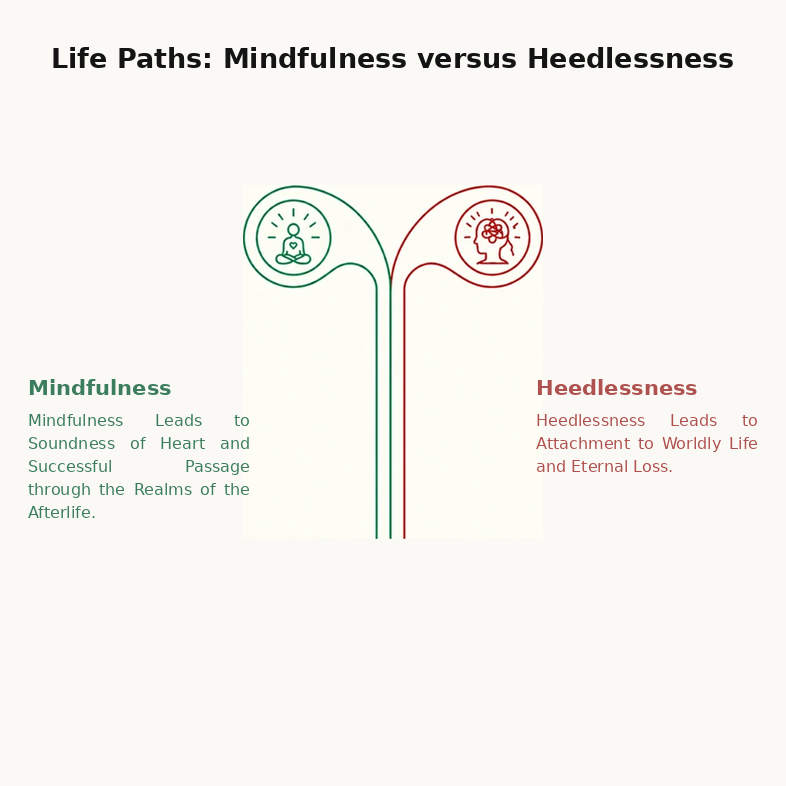
Figure 1. Life Paths: Mindfulness versus Heedlessness
A deep conviction in the certainty of this journey compels a person to redefine everyday life as a means of preparing for and reforming their eternal destiny. Neglecting the inward self and avoiding confrontation with oneself leads to irreparable losses, because the final form a person takes in the eternal realms is precisely the result of firmly-rooted dispositions that have been established within them in this world.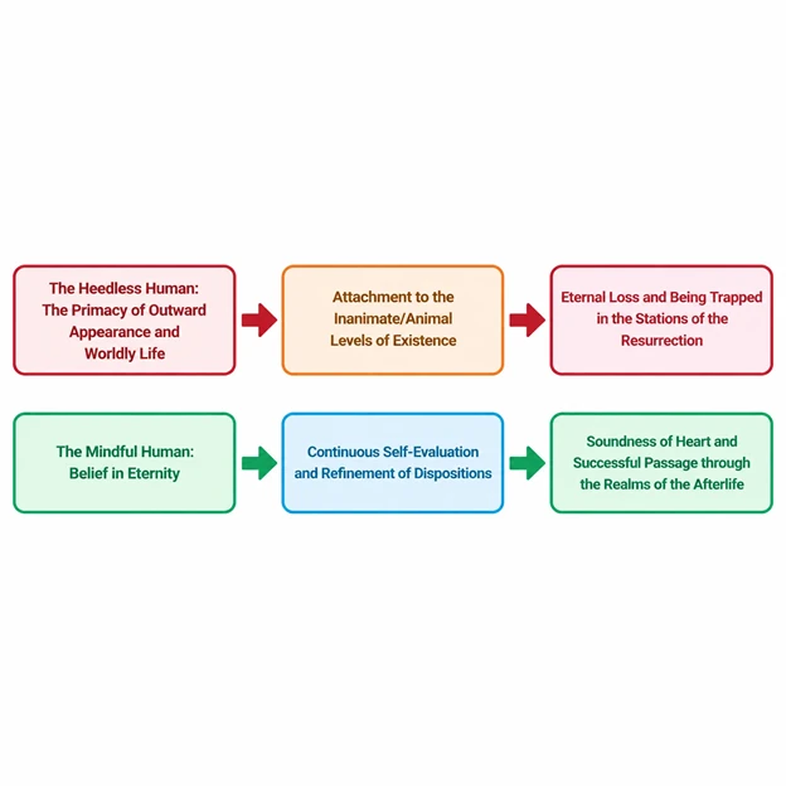
Figure 2: Developmental Paths of the Mindful and Heedless Human
The explicit divine command in the verse, “O you who have faith! Take care of your own souls” [2], establishes the ultimate course of action: Constantly attending to the truth of one’s own existence is a universal responsibility. Any knowledge a person acquires that does not give rise to inner concern, a sense of responsibility, and corrective action is nothing more than a collection of ineffective information and will play no role in that person’s ultimate salvation.
H2 Redefining Self-Cultivation for Eternal Life in Practice
In managing time and planning one’s way of life, the guiding principle must be to prioritize activities according to their eternal impact. The first step is to eliminate futile preoccupations and activities that waste one’s life. The real test, however, comes at the second stage: giving priority to what is essential over tasks that may be important but are not vital.
According to rational principles, the fundamental soundness of the soul takes precedence over any outward virtue or action. A medical analogy makes this principle clear. A person suffering from a progressive form of cancer would never stop medical treatment simply because they wanted to learn a specialized skill or take care of secondary tasks. Moral vices and inner deviations are the deadly cancers of the heart.
Entering Barzakh with an unpurged moral vice can sentence a person to centuries of suffering, according to the laws of divine justice and inward state. Therefore, reason dictates that caring for the heart and purifying the inward state must take precedence even over sacred activities such as merely memorizing the Holy Quran.
A person who has memorized the Quran but lacks good character and inner purity, and whose faith is placed at risk because of bad temper and poor conduct, will gain little Quranic memorization if it remains merely an outward achievement. The first priority is to preserve the foundation of one’s faith and fundamentally heal the self.
Achieving inner purity and lasting peace of heart depends on implementing a structured program that goes beyond merely social interactions. Most social relationships do not have the capacity to nurture love and bring peace to the human heart. To put this goal into practice, the believer must incorporate several essential and non-negotiable elements into their way of life.
❶ Spiritual Mentor: Identifying the hidden afflictions of the self and avoiding errors in recognizing and diagnosing them.
❷ Daily Solitude: Creating an opportunity for reflection, evaluating one’s deeds, and restoring mindfulness through silence and temporary withdrawal from distractions and activities that draw the mind into multiplicity and dispersion.
❸ Continuous Relationship with the Quran and Divine Revelation: Regularly revisiting the truths of existence in order to remove the dust of forgetfulness.
❹ Deep Relationship and Intimate Communion with Allah: Performing nightly acts of worship, especially the Night Prayer, and rising before dawn to strengthen the inner connection with Allah.
❺ Lasting Bond with the Ahl al-Bayt: Aligning oneself with these perfect role models as channels of divine grace and guidance.
❻ Network of Relationships Oriented toward the Hereafter: Redesigning all social interactions, selecting places, and choosing encounters in such a way that every phenomenon serves as a reminder of the final destination and eternity.
The life of the heart depends entirely on nourishment from these sources. Without commitment to these foundations, the human being will remain confined to the superficial layers of worldly life.
To bring the philosophical framework that explains the necessity and process of self-cultivation into lived practice, the following four stages provide a practical roadmap.
Step 1: Diagnosis: Identifying misguided preoccupations at the inanimate, animal, and estimative levels and assessing how much time is being wasted on matters without a meaningful purpose.
Step 2: Screening Relationships and Stimuli: Deliberately shaping what we see, hear, and experience in our social environment in order to create a continuous atmosphere of remembrance and awareness of eternity.
Step 3: Resolving Conflicts and Establishing Priorities: Giving priority to treating the moral diseases of the heart, even if this requires adjusting important but non-essential activities, before transition to the Hereafter.
Step 4: Attending to the Foundations of the Life of the Heart: Setting aside a definite and non-negotiable portion of the daily schedule for solitude, communion with God, the Night Prayer, and connection with the infallible guides.
References
[1]. Quran, 22:66.
[2]. Quran, 5:105.
Comments and questions
Ask a question or share your experience with this lesson.
After signing in and enrolling, you can join the discussion.
Be the first to ask a question about this lesson.