

Barzakh: The First Station After Death | Examining Its Relationship to This World and the Hereafter
Many of us have probably wondered, “What is Barzakh, and where is it?” When we hear the word Barzakh, our minds might drift toward something beyond the galaxies or vague, distant images. But in reality, Barzakh is a true and tangible stage of human existence—a phase that begins immediately after death and continues until the Day of Judgment. According to the Holy Quran, “behind them is a barrier, until the Day they are resurrected” [1].
This station is not a meaningless gap. The Barzakh is like a bridge that connects our worldly life to our life in the Hereafter. In some religious sources, it is also referred to as “Alam Malakut,” “Alam Mithal (Imaginal Realm),” or the “World of the Grave”—a reality beyond the material world, standing at the boundary between sensory forms and the immaterial.
In vocabulary, “the Barzakh” means a barrier or interval — something that stands between two realities and separates them. In the Holy Quran, this expression is used to describe the separation between two seas: “He merged the two seas, converging together. Between them is a barrier, which they do not overrun” [2].
This etymological root shows that the ‘Barzakh-world’ serves as an intermediary between this world and the Hereafter. The relationship between this world and the Barzakh is like the relationship between a mother’s womb and worldly life. In the womb, the fetus lives in a limited realm and has no understanding of what lies beyond. With birth, he enters a new and wider world. This world plays the same role in relation to the Barzakh.
In this life, we have the opportunity to prepare the spiritual provisions we will need in the Barzakh. If we cultivate these provisions, our “birth” into that realm will be smooth and peaceful, but if we remain heedless, we will face a difficult transition—one that requires healing and recovery.
The question “What is Barzakh and where is it?” has two parts: First, what kind of realm the Barzakh is, and second, where it is located. The answers to these questions are not merely for satisfying curiosity; they allow us to understand more deeply the reality of the human being, death, and our eternal destiny.
When we realize that the world of the grave—and the true grave—is none other than our own soul, and that whatever we have cultivated within ourselves becomes manifest in the Barzakh, our way of living changes. Death will no longer seem like a frightening end, but the beginning of a new phase—one that we have built with our own hands.
Put simply, Barzakh is the next stage of life—one that is already with us, but hidden behind the veil of this world. Death merely lifts that veil. This simple understanding can change the way we view our choices, relationships, thoughts, and actions.
In this lesson, we will first explore what Barzakh is, and then address the question “Where is the Barzakh?” so we can gain a clear picture of this next station of life.
What Is Barzakh?
To answer the question “What is Barzakh and where is it?”, we must first clarify its nature. Barzakh is an intermediate stage between this world and the Day of Judgement. However, this intermediate stage is not a bureaucratic pause like those portrayed in comical films; rather, it is a realm with its own real, precise system. Everything that exists in this world only in potential form becomes fully actualized and manifest in the Barzakh.
Each of the other names for Barzakh—such as “Alam Malakut,” the “Alam Mithal,” or the “World of the Grave”—reveals an aspect of its reality. Alam Mithal refers to a realm in which forms and appearances exist, but not in a physical or worldly manner.
When it is called the World of the Grave, it refers to the life that the human soul encounters after death. To clarify this concept, we must distinguish between the “earthly grave” and the “true grave.” Many people assume that the grave is simply the physical pit in the ground. However, in the logic of the Holy Quran and the narrations, the true grave is nothing other than the soul. Just as we live in this world with our inner states and our spirit, we also face our soul and its qualities in the Barzakh. Therefore, if our soul is filled with peace, faith, joy, and light, our grave will be spacious and tranquil. But if the soul is burdened with anger, resentment, or heedlessness, these states will manifest in the Barzakh as constriction and torment.
In the Barzakh, we live with a form suited to that realm — a “facsimile body.” This body is neither purely material nor completely immaterial; rather, it is a delicate form aligned with the soul. The facsimile body is shaped by one’s actions and character in this world. A person who lives with faith and honesty will possess a luminous, human-like form, while someone who spent their life in sin and moral corruption will see those vices take on dark, animalistic shapes in the Barzakh. In truth, the Barzakh is a realm where the inner reality of one’s earthly life is revealed.
According to the Law of Proportion, the relationship between this world and the Barzakh is like the relationship between the mother’s womb and this world. Just as the condition of a fetus in the womb directly affects the quality of his birth and life in this world, the state of the soul in this world determines the quality of our entry into the Barzakh. If a fetus is born healthy and complete, he will have a better life, but if he is born premature or with complications, he will face difficulties later on. Similarly, if a person builds the necessary spiritual resources in this world, their entry into the Barzakh will be smooth and peaceful. But if they remain heedless, entering into the Barzakh will be like a difficult, weak, and troubled birth.
The Barzakh is the realm where a person’s true essence is revealed. At the moment one enters this realm, they come face to face with the reality of their own soul. This shows that the Barzakh is a real stage in the human journey in the system of creation. The important point about the difference between this world and the Barzakh is that, in this world, the possibility of repentance still exists. A person can repent, perform good deeds, and repair their shortcomings. But in the Barzakh, there is no opportunity to return. At the very moment of entry, a person encounters the truth of their own soul, and they reap exactly what they have sown.
Therefore, when we ask, “What is Barzakh and where is it?” we must keep in mind that Barzakh is an existential station, not a geographical location — a station that every human being will inevitably enter, and the quality of their stay there is a direct reflection of the life they lived in this world.
Where Is the Barzakh?
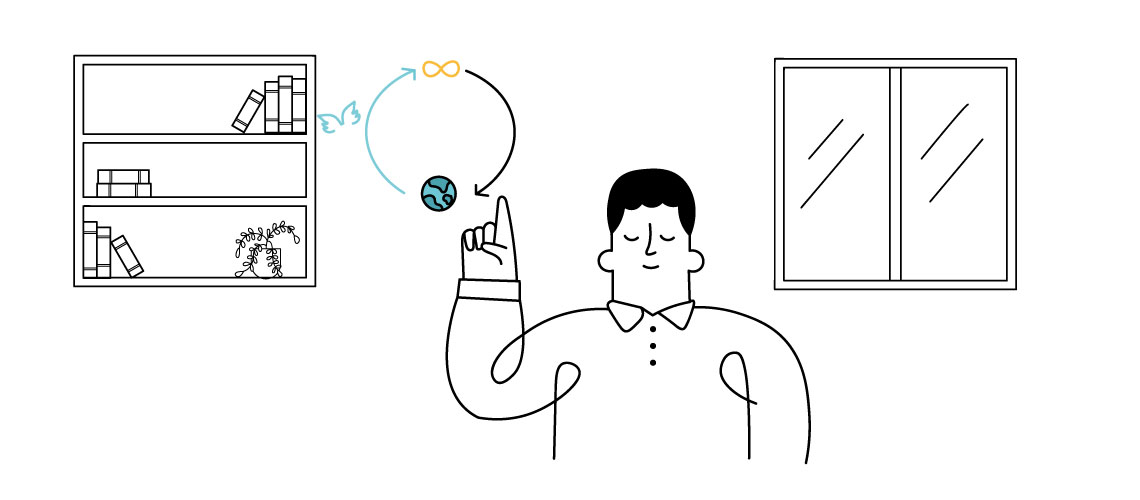
One cannot pinpoint Barzakh’s “location” on a map or by geographical means. Barzakh is not hidden in some corner of the universe, nor do we need to imagine that a person is transferred to a distant point in existence after death. The truth is that Barzakh is a layer of this very reality—a realm that surrounds the physical world, and whose veil is lifted at death. Imam Ali (Peace be upon him) says: “The world is in the Hereafter, and the Hereafter is encompassing the world” [3]. Barzakh, likewise, is part of this continuum and is the first stage of the life to come, encompassing the world.
For a clearer understanding, we can return once more to the example of the mother’s womb. The fetus, within the womb, inhabits a narrow and limited world and remains unaware of the wider realm beyond it. Birth, for the fetus, is a kind of death in relation to his life in the womb, yet in reality it is the beginning of entry into a fuller and more expansive realm. The relationship between this world and the Barzakh is the same. Death is not the end of life; it is another birth— a transition to a higher stage that has already been surrounding the human being. This world is the womb of the Barzakh, meaning that just as the fetus must acquire the equipment needed for life in this world while still in the womb, we too must prepare in this world the provisions for our life in Barzakh.
A key feature of Barzakh is that its laws operate according to the results of one’s earthly life. Whatever we have sown in this world is revealed in the Barzakh. Faith, understanding, worship, and good character appear there as blessings and tranquility; in contrast, heedlessness, anger, irritability, oversensitivity, and injustice manifest as pressure and distress. Barzakh is the unveiling of a person’s true reality — not a new opportunity for action.
In this world, the possibility of making amends still exists, but with death, the record of action is closed. Only the remaining effects of one’s deeds—such as ongoing charity, beneficial knowledge, or the prayers of living people—can help the soul. For this reason, a person in the Barzakh may benefit from the consequences of their actions in this world, even though they are no longer capable of acting directly. With this in mind, when answering the question “Where is Barzakh?” we must say that the Barzakh is the realm in which the harvest of one’s earthly sowing becomes manifest, and it should never be regarded as a new field for planting.
Another important point is the place of the Barzakh within the order of existence. According to the Arc of Descent and the Arc of Ascent, the human being descends from the unseen world (Ghayb) into this world, and after death begins the journey of ascent. The Barzakh is the first station on this ascent— the point at which each person comes to understand what they have gained and what they have lost.
Ultimately, the answer to the question “Where is Barzakh?” is this: Barzakh is right here, within this very world, but on a hidden and distinct layer of existence. Death lifts the veil, and the human being enters a realm that had already been surrounding them. This world is the womb of the Barzakh, and the wise person is the one who, in this second womb, prepares themselves for a greater birth.
What is your understanding of the essence of Barzakh? Has this understanding changed your view of death? In your opinion, which spiritual investments in this world have the greatest impact in the Barzakh? Share your thoughts with us.
References
[1]. Quran, 23:100
[2]. Quran, 55:19_20
[3]. Majlisi, Bihar al-anwar, vol. 30, p. 56.