
From Illusion to Reality: Intercession as a Natural Bond in Divine Justice
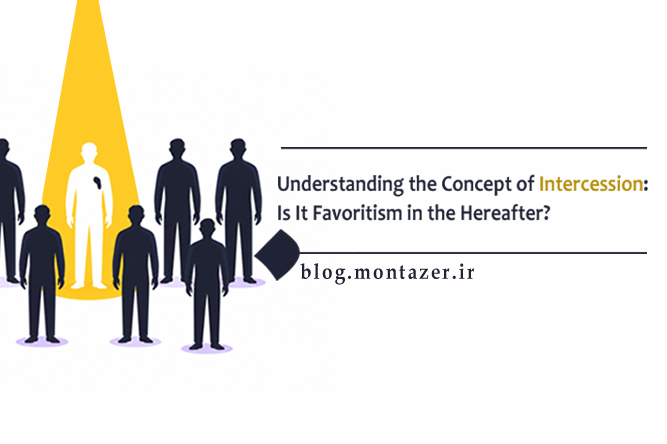
When people think about intercession, they often project their worldly experiences onto the hereafter: a rigid bureaucracy, a thick case file, and an acquaintance who can solve a problem behind the manager’s closed door. From this perspective, intercession means pulling strings—and pulling strings is incompatible with justice. The Quran shatters this image: “Beware of the day when no soul will compensate for another, neither any intercession shall be accepted from it, nor any ransom shall be received from it, nor will they be helped” [1]. Yet elsewhere, the Quran affirms intercession. We cannot properly understand both sets of verses unless we distinguish intercession from favoritism and recognize its true nature. This article seeks to clarify this distinction: In Shia thought, intercession is not a contractual arrangement but a bond rooted in inner compatibility. The person who receives intercession shares an inner affinity with the intercessor and has strayed from the Straight Path only in certain aspects of their conduct.
The Hereafter, the Realm of Truth
The greatest conceptual mistake in this discussion is to compare the hereafter with this world. In his discussions of divine justice, Morteza Mutahhari emphasizes that reward and punishment in the hereafter must be understood as the necessary consequences and ontological results of one’s actions, not as conventional arrangements or arbitrary decrees [2]. In such a system, bribery and unfounded appeals have no place. What a person experiences in the hereafter reflects their own existential reality, as the verse says: “And you will be requited only for what you used to do” [3]. This rules out any form of intercession that would alter a person’s reckoning from the outside, without any existential basis, or function as a form of ransom or worldly compensation. Mutahhari identifies the forms of intercession rejected by the Quran as those envisioned by Jews and polytheists. They believed that lineage, ethnic affiliation, or worshipping intermediaries as beings with independent authority could exempt them from accountability.
The first step, then, is to firmly reject illusory intercession: If it were possible, it would suspend justice and have no place on the Day of Resurrection.
Affirmed Intercession: Permission and Compatibility
The Quran affirms intercession under specific conditions: “Who is it that may intercede with Him except with His permission” [4]; “There is no intercessor, except by His leave” [5]; “Say, ‘All intercession rests with Allah.’” [6]; “And they do not intercede except for someone He approves of” [7]. These verses establish three points:
First, God alone has ultimate authority over intercession; no intercessor acts independently.
Second, an intercessor must act with God’s permission.
Third, the person receiving intercession must be among those whom God approves.
But who is approved? In the Shia view, receiving intercession is not simply a matter of identifying as Shia or Muslim. There must be an inner affinity between the recipient’s soul and the intercessor’s soul. The intercessors—the Prophet and the infallible Imams—guide people along the path of human perfection. Those who receive intercession follow the same path, even if they have stumbled along the way. Intercession means that the intercessor draws close to the person who has fallen behind or slowed down on the path, forming a bond with them. Such a bond is possible because a degree of compatibility already exists between them.
A narration attributed to Imam Sadiq (Peace be upon him) clarifies this boundary: “Verily our intercession will not avail one who takes his Salah lightly” [8]. Taking prayer lightly means neglecting one’s connection with the Source and thereby undermining the bond of compatibility at its root. Such a person cannot receive intercession, not because of hostility, but because no bond remains through which intercession can operate. At the same time, the Prophet’s statement, “My intercession is for those among my community who commit major sins” [9], offers hope that even a serious lapse in conduct does not necessarily sever that bond. These two narrations can be reconciled by understanding that the decisive factor is a person’s inward state, not simply the number of their sins.
As long as faith and love for the truth and its rightful guides remain alive, a person who has strayed in some aspects of their conduct can still return, and the bond can be restored. When the truth of human essence itself has been severed, intercession no longer applies.
The Believer as an Element of the System of Truth
A narration from Imam Sadiq states: “And he was named mu’min (believer) because he is protected from the punishment of Allah, the Exalted, and gives warrant to Allah [for others] on the Judgment Day, and Allah would approve that for him” [10]. If faith is understood not merely as intellectual belief but as a conviction that shapes one’s conduct and entails a commitment to action, then the believer is not an outsider making a request from beyond the system. This understanding is consistent with Sayyid Ali Khamenei’s discussion of faith in “The General Framework of Islamic Thought in the Quran,” where he emphasizes the connection between faith and practical commitment [11]. The believer is part of the inner orientation of the system of truth. The protection they seek does not interfere with justice; rather, it reflects the very truth with which they have aligned themselves.
This is where the difference between intercession and favoritism becomes clear. In favoritism, someone intervenes from outside the system and bypasses its criteria. In intercession, however, the intercessor acts in accordance with the system’s own criterion: a person’s existential growth and alignment with the truth. The intercessor does not intercede without a valid basis; the intercession rests on the merit created by an existing bond.
The Testimony of Forty Believers and God’s Modesty
According to a narration from Imam Sadiq, if forty believers testify at a deceased person’s funeral that they knew nothing but good of the deceased, God, in His grace, would not act otherwise [12]. At first glance, this narration may seem inconsistent with divine knowledge. God knows the deceased person’s true state, so what could the testimony of others change?
The answer rests on the same principle of inner compatibility. When forty believers testify to the deceased person’s righteousness, their testimony indicates that the deceased lived among the community of believers and maintained bonds with them. It also suggests that the deceased’s bond with the faithful has not been severed. This testimony does not increase God’s knowledge; it is evidence of the very compatibility that makes a person worthy of divine approval. Here, this divine modesty does not mean that God is compelled to act; rather, it reflects the honor He grants to believers. Thus, when believers testify on behalf of one another, their testimony does not change the deceased person’s reality from the outside; rather, it manifests and confirms an existing inner bond. This also answers the apparent dilemma: “If the person is worthy, testimony is unnecessary; if not, testimony has no effect.” The testimony itself forms part of that person’s worthiness because it shows that they have not fallen outside the circle of connection.
Intercession, Moral Development, and Hope
At the end of the journey, intercession reflects the same principle of following exemplary guides that must shape a person’s life. A relationship with role models and the friends of God is not merely emotional, nor can it replace action. It must shape a person and make them responsible. Those who have followed the path of the Prophet and the Imams more closely in this world will also be closer to them in the hereafter. Those who have never tried to draw near to them cannot expect an intercessor to take them by the hand at the final moment.
In The Pyramid of Existence, Ayatollah Ha’eri Yazdi presents creation as a hierarchy in which each higher level serves as a channel through which grace flows to the levels below [13]. Within this framework, the intercessor acts as a channel of grace, helping spiritually less-developed individuals with whom they share a bond to grow. Ayatollah Beheshti, in his discussions of how the Quran presents God and humanity, likewise views the human relationship with the source as dynamic and shaped by choice and action, rather than one based merely on a name or label [14]. These three perspectives converge on one point: Intercession depends on a real bond—faith, love, following exemplary guides, and action.
Practical Conclusion: Building the Bond
This discussion leads to two warnings and one source of hope. The first warning is that intercession cannot replace action. If intercession arises from a bond, every sin, every instance of negligence, and every act of turning away from the Source weakens that very bond. The second caution is against denying intercession. To deny it is to reject a reality affirmed by the Quran and the narrations, and to deprive people of the hope that encourages them to return. The hope is that a lapse in conduct does not necessarily mean abandoning the path. Someone who remains fundamentally oriented toward the truth, despite repeated mistakes, may still be eligible for intercession through repentance, correction of their conduct, and maintenance of their bond with the friends of God. In practice, maintaining the bond that makes intercession possible involves three steps. First, maintain an ongoing bond with the Prophet and the infallible Imams (Peace be upon them) by learning about them, loving them, and following their example. Second, correct one’s mistakes rather than make excuses for them. Third, remain part of the community of believers and earn their trust through moral conduct.
Intercession is neither an illusion nor a way to bypass divine justice. The Quran rejects illusory intercession—intercession without a sound basis, based on lineage, or treated as a contractual arrangement. True intercession takes place with God’s permission and for those He approves. It is the intercessor’s helping hand extended to someone who shares an inner affinity with them but has strayed in some aspects of their conduct.
This intercession operates from within the system of truth and is the very essence of justice, because justice means placing everything in its proper place. Those who have maintained this bond belong with those to whom they are connected. The power of intercession, therefore, lies not outside the human being, but in the bond they themselves have built in this world.
[1]. Quran, 2:48.
[2]. Morteza Motahhari, Ashnai ba Quran (Understanding the Quran), Tehran: Sadra Publications, 1995, vol. 5, pp. 85–95. (In Persian).
[3]. Quran, 37:39.
[4]. Quran, 2:255.
[5]. Quran, 10:3.
[6]. Quran, 39:44.
[7]. Quran, 21:28.
[8]. Muhammad Muhammadi Rayshahri, Mizan al-Hikmah (Scale of Wisdom), “Intercession,” hadith 14, citing al-Mahasin, vol. 1, p. 159, hadith 225. https://al-islam.org/mizan-al-hikmah-scale-wisdom/intercession.
[9]. Muhammad ibn ‘Isa Tirmidhi, Jami‘ al-Tirmidhi, Book 37, “Chapters on the Description of the Day of Judgement, Ar-Riqaq, and Al-Wara‘,” hadith 2435. https://sunnah.com/tirmidhi:2435.
[10]. Muhammad M. Khalfan, The Sacred Effusion, vol. 1, chap. 3, “Peace Be on You, O Son of The Commander of The Faithful and The Son of The Leader of The Successors,” commentary, narration 1, Al-Islam.org, https://al-islam.org/sacred-effusion-volume-1-muhammad-m-khalfan/chapter-3-peace-be-you-o-son-commander-faithful-and-son.
[11]. Sayyid Ali Khamenei, An Outline of Islamic Thought in the Quran. Translated by Hamid Tehrani. London: Islamic College for Advanced Studies Publications, 2021. Part 1, “Faith,” Sessions 4–5.
[12]. Muhammad ibn Ya’qub Kulayni, Al-Kafi. Translated by Muhammad Sarwar. Vol. 3, “The Book of Funerals”, Chapter 95, Hadith 14.
[13]. Mehdi Ha’eri Yazdi, The Principles of Epistemology in Islamic Philosophy: Knowledge by Presence. New York: State University of New York Press (SUNY Press), 1992, pp. 115–140 (Chapter 8: Mysticism in the System of Emanation).
[14]. Seyyed Mohammad Hossein Beheshti, Khoda az Didgah-e Quran [God from the Perspective of the Quran]. Tehran: The Foundation for Publishing the Works and Thoughts of Shahid Beheshti (Rouzegar Publishing / Boq’ah Publications), various printings (specifically the discussions on destiny, divine will, and human free will) (In Persian).
Comments and questions
Ask a question or share your experience with this lesson.
After signing in and enrolling, you can join the discussion.
Be the first to ask a question about this lesson.