
The Stages of Creation from the Quranic Perspective: The Divine Plan for the Order of the Universe and Human Responsibility
In the modern age, we have access to a massive amount of information, yet we struggle with an abundance of opposing viewpoints on what it all means. While empirical sciences excel at describing how natural processes occur, when it comes to explaining the logic that governs these processes, differences in perspective become clear. The fundamental question is not merely how phenomena happen, but whether these events can be understood within a consistent, law-governed, and purposeful framework, or if they are simply a series of random occurrences.
At this point, the Quranic worldview offers a vital perspective. Rather than presenting fragmented ideas, it provides a clear structure for understanding existence. By introducing the stages of creation, the Quran presents the universe as an ordered process where every element has a specific place, relation, and function. Understanding this framework does more than just deepen our perception of the world, but also brings clarity to the human position within it.
The Stages of Creation and the Principle of Absolute Measure in the Universe
One of the most central Quranic statements regarding existence is the verse: “And everything with Him is by measure” [1]. This verse is not merely a metaphorical description of order in nature. Rather, it expresses a fundamental ontological principle: No being exists without a specific measure, proportion, and limit. The expression “everything” indicates that this rule is universal and without exception.
Within the framework of the stages of creation, the principle of measure plays a foundational role. Without it, no distinct stages could be identified, nor could any meaningful connection be established between the components of the universe. Measure is the very logic that makes rational analysis of the world possible and rescues it from conceptual chaos and disorder.
The Quranic method of explaining the universe is based on moving from the general to the specific. First, a universal principle is established, and then its internal layers are revealed. Unlike vague generalizations, this method allows humans to understand the underlying structure and recognize the relations within it.
The presentation of the stages of creation follows this exact logic. By introducing four distinct stages, the Quran shows that creation is not a sudden, unstructured event, but rather a purposeful and analyzable process. Each stage serves as a prerequisite for the next; removing or merging them would disrupt our understanding of the system as a whole.
The Stages of Creation in the Quran
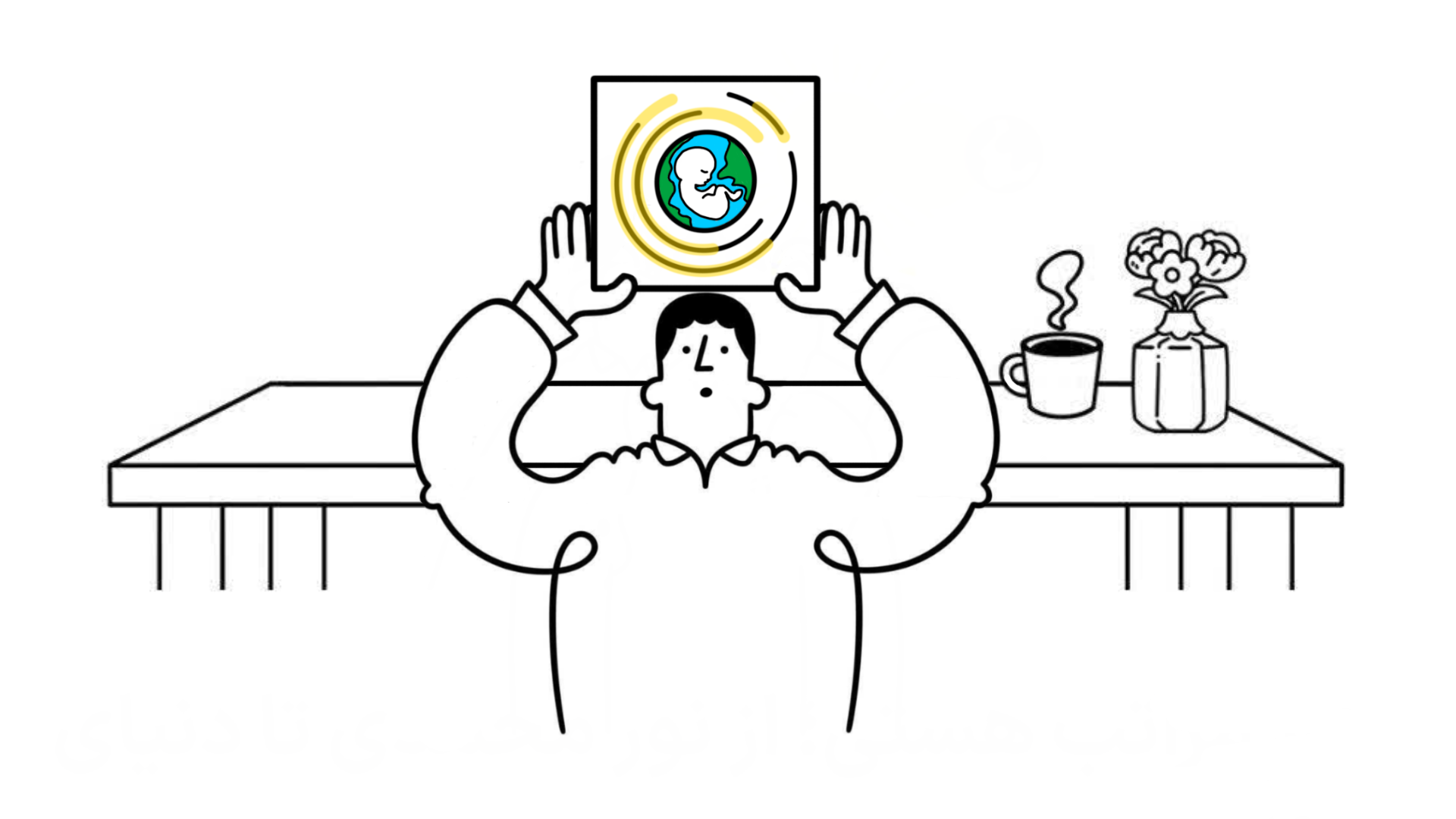
The verse, “He Who created and then proportioned; and He Who destined and then guided” [2], outlines the primary framework for the stages of creation.
Creation as the Beginning of the Actualization of Existence
The first stage is creation, the principle of bringing something into being. At this stage, a being comes to exist. Creation is the necessary condition for the emergence of any phenomenon, yet by itself it is not sufficient for the formation of a stable system. In the logic of the stages of creation, creation establishes the conditions for existence rather than the full realization of a structure. If creation stopped at this level, the universe would have become a collection of scattered, incoherent entities. Therefore, creation always requires further stages to lead it toward order and meaning.
The Role of Proportioning in the Coherence of the Universe
Following creation is the stage of proportioning. Proportioning means organizing, balancing, and harmonizing the existential components of a phenomenon. At this stage, the internal structure of an entity is stabilized, and its parts are placed in their correct relationship with one another.
Within this framework, proportioning plays a vital role; without it, creation would result in instability. Proportioning provides the necessary ground for precise measures and limits to be established, preventing disorder in the system of creation. This stage shows that order is the result of conscious arrangement, not a product of chance.
The Central Role of Determination
The third stage is determination (Taqdir), which can be considered the heart of the system of creation. Determination refers to existential measurement, the determination of capacities, limits, proportions, and the specific place of every being within the entire system of creation.
In the logic of the stages of creation, determination is not limited to quantitative characteristics; it also defines the relationship of each being with other components of the universe. Determination is the legalistic framework of the world and must not be confused with fatalism or pre-determinism. This stage makes the stable and predictable order possible.
Moving in Proportion to Measure
Following determination comes guidance. Guidance is the process of leading every being toward the path and ultimate purpose determined according to its specific measure and capacity. This stage reflects the dynamism of the universe, a world where entities are not merely static but are in constant motion toward fulfilling their inherent potentials.
Within the framework of the stages of creation, guidance is meaningless without determination. Direction is impossible until measure and proportion have been established. The continuity between these two stages reveals the internal cohesion of the system of creation.
What transforms these stages of creation into a “system” is not simply the number of stages, but their internal relationship and structural interdependence. These stages are not separate parts, but links in a single chain, where each is a prerequisite for the realization of the next.
Creation without proportioning leads to fragmentation and instability. Proportioning without determination lacks criteria and measure. Determination without guidance leads to stasis and aimlessness. Therefore, each stage is both influenced by the preceding one and prepares the ground for the following one.
In this framework, creation must be understood as a continuous process in which “bringing into existence,” “organizing,” “measurement,” and “guiding” find meaning in succession, not in isolation. This continuity shows that the universe was not formed through a fragmented or accidental logic but proceeds under a gradual and purposeful order, an order where understanding any single part is incomplete without considering the whole process.
The Stages of Creation and Defining the Human Status in the Universe
The human being is also defined within this very same staged system. We differ from other beings not because we break the rules, but in how guidance is realized in our lives. Human guidance is conscious and rooted in free will. Divine determination has placed the capacity for choice in humans, while guidance shows the correct path for using this capacity.
Understanding the stages of creation prevents two common errors: absolute determinism and unregulated abandonment. The human being is neither forced nor unrestricted, but rather a responsible being within a precise and purposeful system.
Knowing these stages reforms the human perspective on the self and the world. Human talents, limitations, and circumstances are not accidental, they find meaning within the framework of determination. As this understanding deepens, human responsibility toward oneself, society, and the world becomes more rational. Understanding this structure keeps humans from opposing the order of the universe and invites them to consciously harmonize with it.
The analysis of the stages of creation shows that the realm of existence is the result of a precise, staged, and purposeful process. Creation, proportioning, determination, and guidance are four interconnected pillars; understanding any one of them is incomplete without the others.
By knowing this framework, human beings can rediscover their true position in the universe and correctly define their relationship with free will, lawfulness, and responsibility. This understanding provides a rational foundation for conscious living in the world.
References
[1]. Holy Quran, 13:8
[2]. Holy Quran, 87:2–3
Comments and questions
Ask a question or share your experience with this lesson.
After signing in and enrolling, you can join the discussion.
Be the first to ask a question about this lesson.