
From the Heavens to the Earth: The Greatness of Creation as a Roadmap for Elevating the Human Being
Imagine walking into an enormous factory, a place where everything, from the smallest bolt to the most complex machinery, is organized with precise order. The production lines, warehouses, control systems, and even the pathways for employees are all designed with a specific purpose in mind. In such a space, no rational observer would ask, “Was this place built without a goal?” or “Was this vast array of equipment put together by chance?” Instead, the primary question would be: “What product is this factory designed to create, and who is its intended user?”
Now, if we shift our gaze from this limited example to the universe itself, a cosmos with billions of galaxies, precise physical laws, complex life forms, and wondrous connections between its parts, is it logical to assume that this purposeful system lacks a goal or has no relation to humanity? The Holy Quran identifies this exact point of analysis, stating: “It is He who created for you all of that which is on the earth”
[1]. This verse provides a clear interpretive framework: The world is not a neglected or aimless collection of things. Rather, it is a purposeful structure where the relationship between the universe and the human being is like the relationship between a “nurturing environment” and “growth.” From this perspective, the greatness of creation is not just a wonder to behold; it is the key to understanding the status of human beings and their path toward perfection.
The Greatness of Creation on a Cosmic Scale
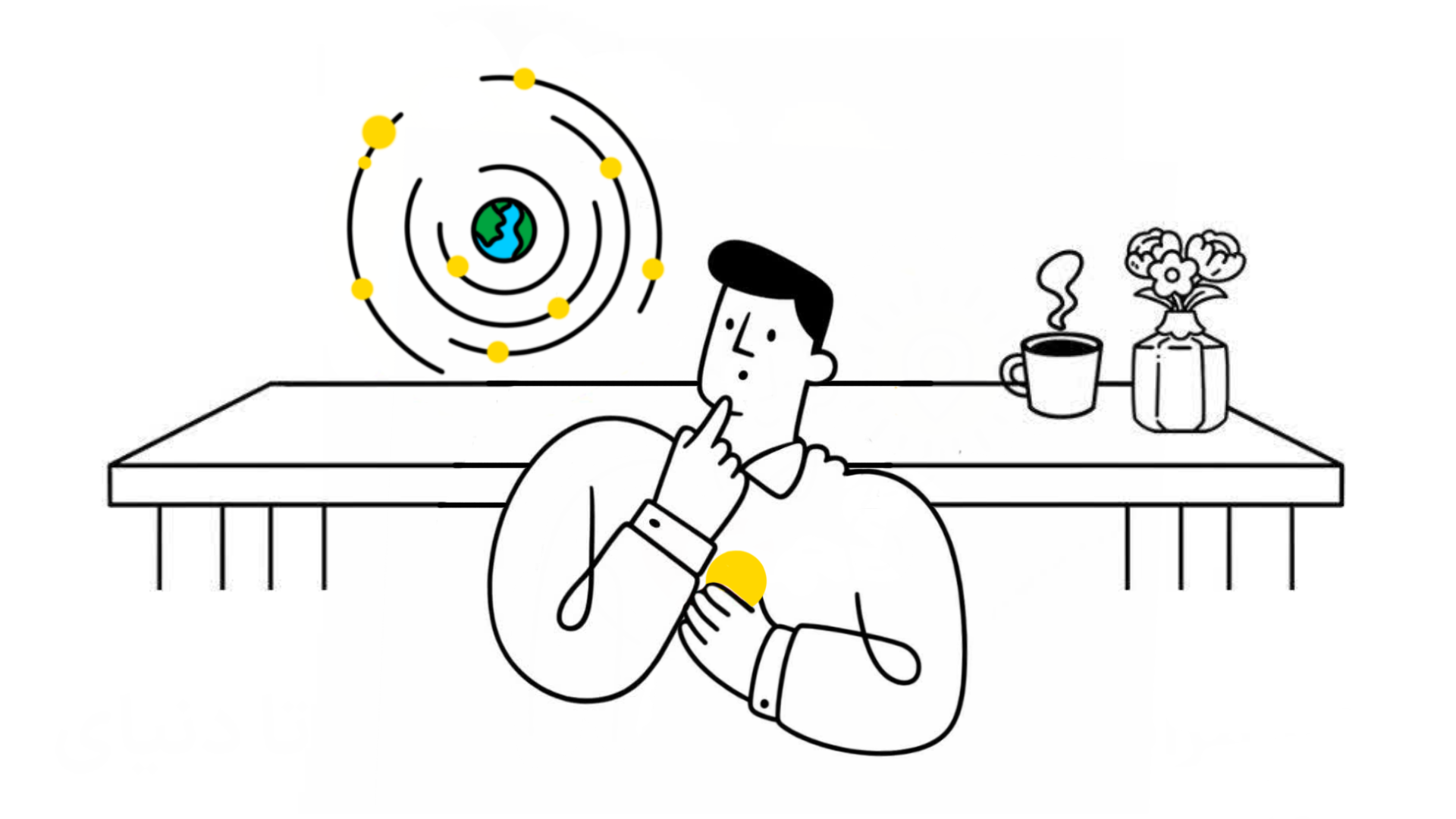
One of humanity’s first encounters with the vastness of the universe is looking up at the sky. With brief yet profound language, the Holy Quran speaks of the beginning of the creation of the heavens and the earth, inviting humankind to reflect deeply on this process.
Despite remarkable advances in astronomy and cosmology, what humanity has observed so far is only a limited portion of creation, the same “lowest heaven” that the Quran describes as being adorned with stars. Billions of light-years of distance mark only the borders of this level of creation, not its end. Science’s inability to move beyond this first layer carries a clear message: While humans are capable of discovery, they have yet to uncover the ultimate truth of existence.
At this point, the greatness of creation takes on an educational role. By witnessing this vastness, humans become aware of the inherent limitations of their empirical reason and realize that to understand the meaning of existence, they require Divine guidance. This awareness is the prelude to rational servitude and an exit from epistemic arrogance, which is considered the greatest obstacle to spiritual growth.
The Greatness of Creation on Earth: A School of Perception and Responsibility
Looking at the skies makes us think about infinity, but looking at the Earth shows us the perfect precision, balance, and wisdom found in small things. By highlighting the diversity of the Earth’s produce, the Quran draws our attention to a phenomenon that, despite its apparent simplicity, carries deep meaning: the same soil, the same water, and similar conditions, yet entirely different results.
Fruits with various tastes, colors, and functions emerge from a single source. This consistency shows that the system of creation is not merely based on consumption, but is designed around balance and reproduction. At this level, the greatness of creation teaches humanity that benefit always comes with responsibility.
The Earth, therefore, becomes a training ground for humans, a place to practice proper use, maintain balance, and avoid excess. Any disruption in this order is not due to a flaw in creation, but is the result of poor human choices. From this perspective, nature is a mirror in which humans can observe their own behavior and the level of their understanding.
The Greatness of Creation as a Path to Educating Humans Toward Becoming Like God
In monotheistic logic, the ultimate purpose of human creation is not merely survival or material welfare. The human is a being with the potential to acquire and manifest Divine attributes such as knowledge, free will, mercy, and wisdom. However, realizing this potential requires an appropriate environment: a foundation that provides both the opportunity for growth and the grounds for testing.
Within this framework, the greatness of creation functions as an educational system. The heavens lead the human being to epistemic humility, the earth calls them to practical responsibility, and the diversity of creation invites reflection and conscious choice.
If the human being views the world merely as a source for satisfying their desires, its greatness becomes a tool for negligence. However, if they perceive it as a guiding sign, every natural phenomenon becomes a step toward perfection. Thus, creation is not an obstacle to closeness to God, but rather the very means to achieve it.
In the Quranic worldview, the universe is not a purposeless or purely material stage; it is an intelligent structure designed for human education. The vastness of the skies, the order of the earth, and the sustainability of life all gain meaning within a system whose destination is actualizing the divine potentials of the human. The greatness of creation is truly understood only when the human sees it not as the end, but as the path toward manifesting the names and attributes of God. This journey begins with reflection and ends in conscious choice.
References
[1]. Holy Quran, 2:29
Comments and questions
Ask a question or share your experience with this lesson.
After signing in and enrolling, you can join the discussion.
Be the first to ask a question about this lesson.