

Lasting Righteous Deeds: An Analysis of the Logic of Lasting Deeds in a Monotheistic System
Imagine someone planted a tree years ago in a corner of a city, driven by pure intention rather than a desire for recognition. At that moment, it might have seemed like a simple environmental gesture. However, over time, that same tree has become a vital element in the lives of others. Passersby enjoy its shade, the surrounding air is purified, and a healthier environment takes shape. The striking point is that this impact continues independently of the presence, or even the life, of the person who planted it.
This simple example leads us to a deeper question: Is a human deed merely an event confined to the moment of its performance, or can it possess a kind of existential extension? In other words, is there a relationship between a human and the outcome of their deeds that goes beyond the instantaneous “agent-action” connection?
In many human activities, the effect of an action fades once the task is finished. Yet, lived experience shows that some deeds, contrary to this rule, enter a cycle of continuous influence. These actions not only persist in our social and cultural lives but also hold a significant status in religious logic.
The concept of lasting righteous deeds (Baqiyat al-Salihat) refers precisely to this category of actions: deeds that transcend individual action and evolve into “enduring assets” in human life. Within this framework, a deed is no longer just a moral behavior but becomes part of the mechanism for the survival of meaning in human life.
By drawing on hadith literature and a rational analysis of its examples, this article seeks to examine the relationship between humans and the lasting output of their deeds. It aims to show how certain deeds, by addressing fundamental human needs, gain the capacity to cross the boundaries of time and maintain a perpetual impact.
The Meaning of the Continuity of Deeds in the Monotheistic Perspective
In the monotheistic framework, human action is not viewed merely as a fleeting, momentary gesture. Rather, it is regarded as a phenomenon that holds an existential position. Based on this view, every deed, beyond its immediate fulfillment, carries the capacity for future impact. This perspective reveals a fundamental difference between the monotheistic outlook and purely secular ethical or sociological interpretations of deeds.
In non-monotheistic views, a deed is often analyzed as an individual behavior with limited temporal effects. However, in the monotheistic logic, a deed is woven into a network of causes and effects that can go beyond the time of its performance. More precisely, within this framework, a human deed enters the Divine causal system, thereby gaining the potential for permanence and continuity.
The essential point is that, in this view, the “survival of the deed” does not depend on the physical presence of the agent. What persists is the trace of the deed, an effect that plays a role in the structure of others’ lives or in their path toward growth and guidance. Therefore, the criterion for continuity is not the person’s lifespan, but rather the degree to which the deed connects to enduring human needs.
From a monotheistic standpoint, the human is a being capable of starting a “chain of impact.” Whenever our deeds are performed in a way that allows for repeated benefit, they go beyond the individual level and enter the social and historical spheres. This is the precise point where a deed acquires a civilizational identity and can be analyzed within the framework of lasting righteous deeds.
Moreover, in a monotheistic perspective, the continuity of action gives new depth and meaning to the concept of human responsibility. A person is held accountable not only for performing a deed, but also for its foreseeable effects. Consequently, rationality, foresight, and the assessment of long-term effects become inseparable components of practical ethics.
Ultimately, by redefining the relationship between humans and their deeds, the monotheistic perspective opens a horizon beyond immediate rewards. Within this horizon, a righteous deed achieves its full potential only when it continues to positively impact others, contributing to a lasting legacy of goodness.
The Theoretical Framework of Lasting Righteous Deeds
According to a narration from the Prophet (Peace be upon him and his family), there are seven specific factors whose rewards continue to be recorded for an individual even after their death, “There are seven things that continue to earn rewards for a person even after their death: planting a tree, digging a well, building a canal, constructing a mosque, writing a book, leaving behind knowledge as an inheritance, or having a righteous child who prays for forgiveness on their behalf after their passing away” [1]. The significance of this hadith lies not merely in the enumeration of these items, but in the underlying logic that connects them.
First, the phrase “continue to earn rewards for a person even after their death” clearly indicates that the criterion for the continuity of reward is not the physical life of the human being, but rather the life of the deed’s impact. Thus, the hadith assumes a fundamental principle: A connection remains between the action and the agent even after death, provided that the action possesses specific qualities.
Second, the audience of the hadith is universal. The word “Rajul” (one) in this narration refers to humankind in general and is not gender-specific. This shows that this principle is a universal human law, not a decree limited to a specific group. Consequently, the theoretical framework of the hadith can be applied to all people across all eras.
Third, there is the symbolic essence of the examples provided. The tree, the well, the canal, the mosque, the book, knowledge, and a child all represent essential domains of human life: livelihood, survival, guidance, awareness, and generational continuity. Instead of focusing on the changing details, the hadith points to fixed principles. This suggests that the objective of the narration is not to limit lasting righteous deeds to a few specific acts, but to provide an analytical model for identifying enduring deeds.
Based on this model, any deed that can sustainably address authentic human needs and allow for repeated benefit by others falls within the logic of the hadith. Therefore, the hadith of the Prophet (Peace be upon him and his family) serves not only as the narrative foundation but also provides a theoretical framework for understanding the relationship between the human being, action, and the continuity of effects. This framework forms the basis for the rational analysis of these instances in the following discussion.
Conceptual Analysis of the Seven Examples of Lasting Righteous Deeds
The examples introduced in the Prophetic hadith as factors for the continuity of reward after death may, at first glance, appear diverse and heterogeneous, ranging from planting a tree and digging a well to teaching knowledge and raising a righteous child. However, a conceptual analysis reveals that they all fall under a shared logic: the sustainable fulfillment of fundamental human needs.
The tree, the well, and the canal are directly linked to the biological dimension and human survival. They facilitate a healthier life and support the continuity of life. The mosque, as a symbolic place of worship, addresses the human need for guidance and connection with the Transcendent. Books and knowledge strengthen the epistemic and intellective dimensions of the human being. A righteous child ensures the continuity of morality and faith across generations. Therefore, these examples must be understood not as a closed list, but as representative examples of the primary domains where human actions affect the lives of others.
What all seven examples share is that their outcomes are not meant for the personal use of the agent alone. These actions create foundations from which others can benefit repeatedly. Here, the action transcends the level of individual benefit and evolves into public service. This characteristic provides a vital criterion for distinguishing enduring deeds from fleeting ones: the broader and more sustainable the scope of benefit for others, the greater the potential for that action to enter the realm of lasting righteous deeds.
A crucial point in understanding this hadith is considering the historical context of its narration. Examples such as palm trees, wells, or canals were proposed in accordance with the needs of society at that time. However, the logic governing them is not confined to those conditions. In the contemporary world, the ways in which human needs are met have changed. Today, contributing access to clean water, developing public education, producing beneficial knowledge, or creating healthy cultural platforms serves the same function that digging a well or authoring a book did in the past. Within this framework, lasting righteous deeds are not static but possess the capacity for rational adaptation to social transformations.
The Role of Intention and Conscious Design of Action
While the essence of a deed itself is important, it is not sufficient. The combination of a suitable example, right intention, and conscious design enables an action to have lasting impact. A deed performed without regard for long-term effects, even if seemingly good, will not necessarily enter the cycle of enduring impact. In religious logic, an intention focused on continuous service and a forward-looking perspective elevates an action from the level of momentary reactions. From this viewpoint, lasting righteous deeds are the result of the union between Divine intention and practical rationality.
A Righteous Child as an Instance of Lasting Righteous Deeds
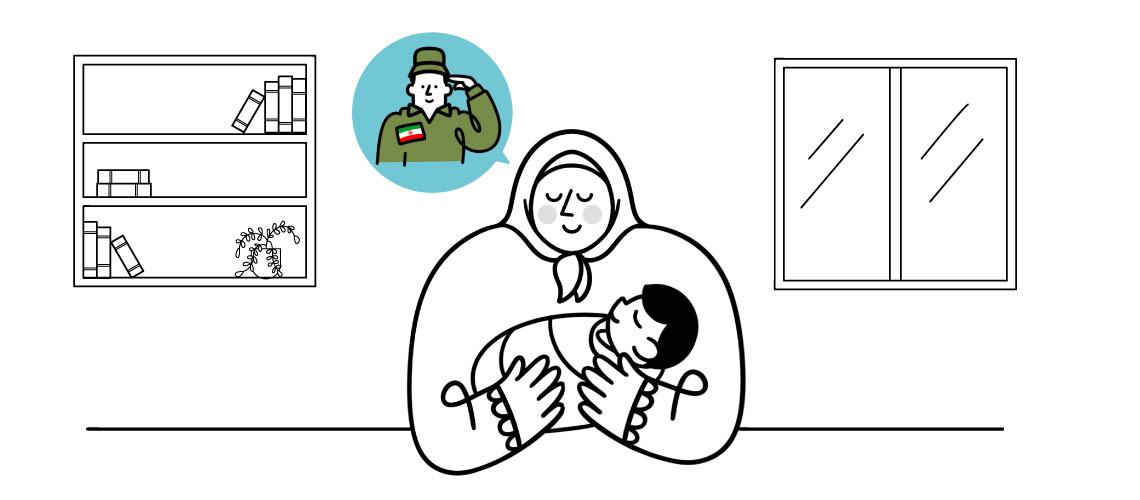
Among the mentioned examples, the righteous child holds a distinct position. Unlike other examples that are primarily structural or material, a righteous child is a living, independent agent. Raising such an individual means creating a future source of moral and faith-based action. This example shows that the permanence of impact is not limited to constructing structures or producing tools. Rather, spiritual development is considered the deepest and most complex form of lasting righteous deeds.
The Difficulty and Cost of Enduring Deeds
Deeds that carry lasting impact are usually accompanied by cost, patience, and at times, a lack of immediate recognition. Unlike short-term actions, these deeds do not offer immediate benefits for the agent. This very characteristic makes them prominent from an educational and ethical standpoint.
In fact, the difficulty of realizing lasting righteous deeds is one of the reasons for their special valuation in the Divine reward system. This is because such deeds, rather than being driven by fleeting emotions or immediate gain, are founded upon conscious choice and long-term commitment.
The Distinction Between Transitory Good Acts and Lasting Righteous Deeds
Not every good deed is necessarily an enduring one. The fundamental difference between a transitory good act and a lasting impact lies in the continuity of benefit for others. A deed that produces a one-time effect is not existentially equal to one that reproduces its benefits repeatedly. This distinction provides a clear criterion for identifying lasting righteous deeds from other virtuous acts, shifting the human focus from the quantity of the act to the quality of its impact.
What emerges from the preceding discussions is that within monotheistic logic, the human being is not defined solely within the framework of their biological lifespan. Their deeds can be designed to go beyond the boundaries of individual life and persist within the structure of others’ lives. From this perspective, a deed is not merely a moral or social gesture; it is an integral part of a person’s existential identity and their mode of presence in the world.
The analysis of the Prophetic hadith and the examples it presents show that the permanence of impact is not dependent on the outward form of the deed, but rather on its internal logic. Any deed capable of sustainably addressing fundamental human needs and allowing for repeated benefit possesses the capacity for survival. This principle enables the rational generalization of these examples across all eras and historical conditions, proving that the concept of lasting righteous deeds is not limited to specific forms or a particular period.
From this perspective, human responsibility is extended beyond the performance of occasional good deeds and calls the individual to reflect on the long-term effects of their choices. Within this framework, pure intention, practical rationality, foresight, and an awareness of social impact all play decisive roles in shaping enduring deeds.
Ultimately, within this logic, the human is a being capable of “existential investment,” which not only influences the lives of others but also determines their relationship with the hereafter. Such a perspective elevates righteous deeds from a mere individual duty to a level of conscious participation in the enduring flow of goodness in the universe, opening a deeper horizon of meaning and human responsibility.
References
[1]. “Sab’atu asbaabin yuktabu lil’abdi thawabuhaa ba’da wafaatihi rajulun gharasa nakhlaan aw hafara bi’ran aw ajraa naharan aw banaa masjidan aw kataba mus’hafan aw waritha ‘ilman aw khallafa waladan saalihaan yastaghfiru lahu ba’da wafaatihi.” (Nahj al-Fasahah (Height of Rhetoric), trans. Hossein Vahid Dastjerdi. Qom: Ansariyan Publications, hadith no. 2159).