

How Are the Stages of the Resurrection Defined, and Why Do They Matter for Our Eternal Life?
The concept of the Resurrection is a multifaceted topic often examined from various perspectives due to its immense significance. The stages of Resurrection, the process of being raised, and the events of the Judgment Day are essential themes typically discussed alongside the broader concept of Resurrection.
As noted in previous lessons, our personal resurrection begins the moment we pass away and exit this world. However, with the end of the world and the raising of all humanity, we enter a different phase known as the Major or Greater Resurrection (Qiyamah al-Kubra). While people often first imagine the terrifying physical upheavals of the Last Day, we must not overlook that the Resurrection is primarily a scene of accountability—a review of how we functioned within the womb of this world. In fact, belief in the Day of Judgment and the reality of being held accountable serves as a vital catalyst for refining our conduct here. This mindset regulates our thoughts, behaviors, decisions, and choices, all of which will be questioned in the hereafter.
We succeed in any life stage only when we go beyond our limited perspective and align our vision with that of the Creator and Governor of the universe. We must value things exactly as God values them. The fact that the Quran refers to the Resurrection by numerous names—with “Yawm al-Qiyamah” alone appearing 70 times in the most authoritative book of creation—underscores its vital importance to God and demands our utmost attention.
In this lesson, by examining the stages of the Resurrection, we will reach a higher understanding of this life phase and prepare ourselves to pass through these stages safely.
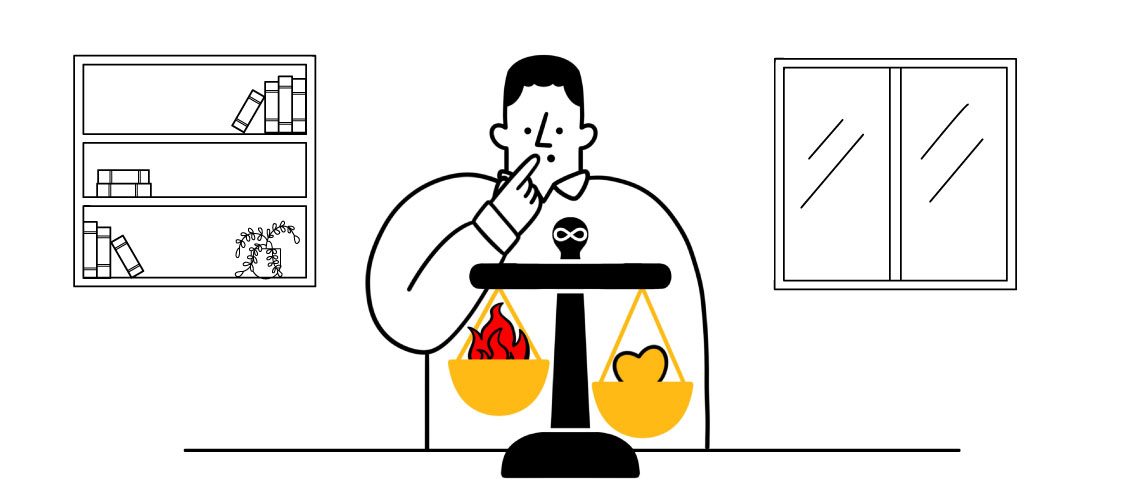
Examining the Stages of the Resurrection
As previously mentioned, our departure from this world marks the beginning of our resurrection. Entering the Intermediate Realm (Barzakh) initiates our Lesser Resurrection (Qiyamah al-Sughra). However, the Greater Resurrection—the event commonly referred to as the “Judgment Day”—encompasses further stages mentioned in the Quran and various supplications, which we will detail below.
Ba’th (Return to Life after Death)
Once our attachment to the material world dissolves and the Unseen realm becomes dominant, the stage of Ba’th begins. Entering Barzakh means entering a new world with a structure, system, and conditions entirely different from Earth; the prerequisite for living there is compatibility with that structure and system. Thus the Greater Resurrection begins when the Barzakh system ends, and we are raised into the new system, that is, the system of the hereafter. While the initial Ba’th in the grave and Barzakh is individual, the Greater Resurrection involves the collective raising of all humanity. While the fear of the Lesser Resurrection is personal, the awe and terror of the Greater Resurrection encompass all of humankind.
Hashr (The Gathering)
Hashr literally means “gathering” and refers to the stage where all humans are assembled on the vast plain of accountability of the Judgment Day. Here, every individual is present, and everyone who had any connection or “rights” over another in the world will come face-to-face. No deed remains hidden within God’s immense scales of justice, and no right is ignored. Consequently, people will flee from one another out of fear regarding the oppressions, negligence, and betrayals they committed against one another during their earthly lives.
Hisab (The Accounting)
Perhaps the most sensitive of the stages of the Resurrection is the accounting of deeds—the actions within our free will for which we are responsible. Just as a newborn’s performance in the womb is assessed at birth through thousands of factors, we are measured at our birth into the hereafter based on our compatibility with the living conditions of the hereafter. Any negligence or error in this world manifests as a weakness, defect, or disease in the system of the hereafter.
The precision of this calculation cannot be overstated. To better understand this, we need only consider the various factors involved in a newborn’s compatibility with the living conditions of this world. Take, for example, a small yet vital organ like the eye: the size of the eyes, their structural symmetry, their coordinated movement, the function of the regulatory muscles, the operation of the optic nerve, the rods and cones, alongside the precise workings of the cornea, iris, retina, and thousands of other factors must all align perfectly for a newborn to have healthy vision. This illustrates the immense and precise scope of “judgment” in this world; the same level of meticulousness governs the entire process of fetal organ development as it prepares for life on Earth.
The crucial point, however, is this: Just as we will encounter an infinitely vaster and more complex realm in the hereafter compared to this world, the criteria for calculating our deeds—and the intricate dimensions of each action—will be proportionately far more extensive.
The Criterion for Judgment
The point here is that the criterion for the judgment and examination of our deeds on the Day of Resurrection is the Truth (Haqq). As we also mentioned in previous lessons, the origin and truth of our existence come from Allah, and through our infinite spirit, we have a connection with the Truth—that is, God and the Ahl al-Bayt (Peace be upon them). For this very reason, in order to achieve true bliss, we are only permitted to adopt the lifestyle ordained by a Creator who is Himself the foundation of the Truth, and who organizes our life according to the seven areas of expertise that are necessary for reaching the Truth.
In reality, falsehood—which has no access to the criteria of the Truth and lacks the seven areas of expertise necessary for our guidance and direction—does not have the ability to instruct us, even if it desires to do so. This is because it makes its own limited knowledge the basis for decision-making, and rather than relying on solid foundations, it steers the base and foundation of our lives toward relative and weak matters, doubts, and illusions. Therefore, it has absolutely no right to determine a lifestyle for us, and it only leads to our distancing from the standards and criteria necessary for a healthy birth into the Hereafter.
Being created from the Truth makes us worthy of receiving a correct and divine lifestyle and acting in accordance with the indicators of the Truth. And since there is absolutely no compatibility between our existential structure and falsehood, any deviation or distancing on our part from the criteria of the Truth in worldly life leads to our unhealthy birth into the system of the hereafter, and will result in tribulation within the eternal system.
In this lesson, we examined the most important stages of the Resurrection. We noted that among the stages of the Resurrection, the stage of the reckoning of deeds is highly dependent on our lifestyle in this world, and it is our proximity to or distance from the criteria of the Truth that will determine our condition in the eternal system.