

The Importance of Patience and Avoiding Haste in Mental Health Therapy
In the complexities of daily life, many of us wrestle with emotions such as anxiety, fear, despair, and other distressing mental states. These feelings, which sometimes become chronic, can severely impact our quality of life and turn into a major barrier against the flourishing of our human potential. On the other hand, moral vices like jealousy, malice, over-sensitivity, anger, and the like also cast a shadow over our social relationships with others and our healthy connection with God, slowing down our movement toward acquiring a sound heart. This is where fundamental questions preoccupy the minds of concerned and thoughtful individuals, prompting them to reflect and contemplate:
-Can I be freed forever from these distressing emotions and psychological states?
-Is mental health therapy and the eradication of moral vices a distant, unattainable ideal, or can I reach it through patience and effort?
-How can I improve my relationship with family and friends, which have been damaged due to my negligence? What skills must I learn in this regard? Is the treatment of my mental disorders and the repair of my relationships with others possible in the short term, or must I give myself time?
If you are among those who value personal growth and development and care about improving your quality of life and upgrading your character, stay with us. In this lesson, we will address the importance of patience as a crucial strategy in mental health therapy.
The Power of Small and Continuous Steps in Mental Health Therapy
In previous lessons, we discussed the mechanism by which characteristics are formed within a person. We stated that one’s disposition is shaped by their deeds. Our deeds, through continuation and repetition, turn into acquisitions, and these acquisitions shape our disposition. More simply put, every deed, good or bad, leaves an effect in our soul. The repetition of that deed over time turns it into a disposition and establishes it in our soul. It does not matter whether this deed is performed by our physical limbs and organs or by our mind. Based on our previous definition of deed, thoughts are also a part of our deeds and have the same effect on the soul as bodily deeds do.
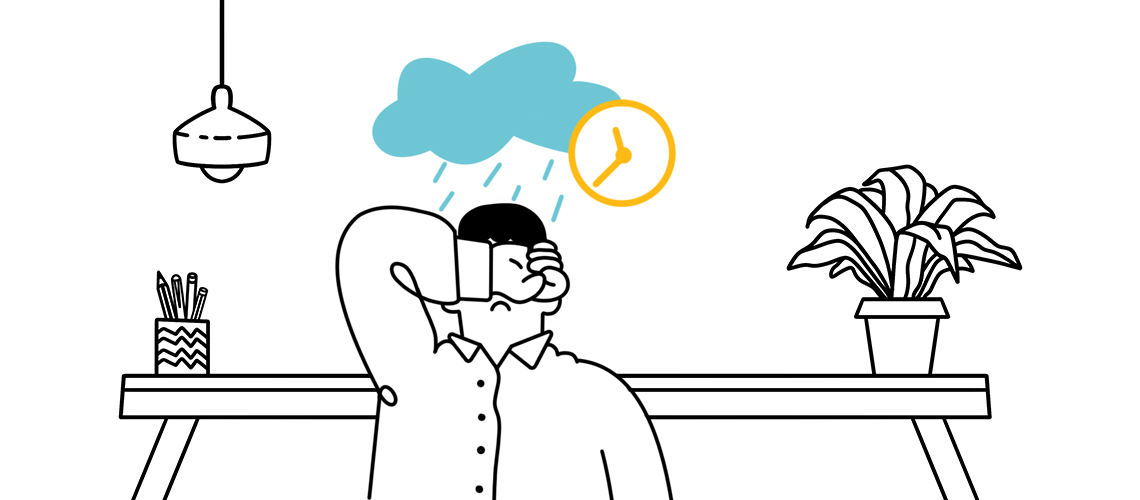
Given the process-oriented nature of these changes and transformations, no deed turns into a disposition overnight. For deeds to become established as a disposition, they require the passage of time, consistency, and repetition over a specific duration. The factor of time plays a crucial and key role in the creation of both positive and negative mental states. For instance, anxiety, as a distressing mental state, is the product of a relatively long period and the continuous suggestion of negative thoughts. Similarly, calmness and mental stability, which the Quran refers to as tranquility of the heart, are also the product of a period of time, continuous practice, and self-suggestion. A person known as quick-tempered and angry did not acquire this trait overnight; rather, this characteristic was ingrained in them over time through continuity and repetition. The same applies to a kind and compassionate person. Generally, the fixation of any state in the soul results from consistent deed related to that state over a period of time. The longer this period and the stronger the self-suggestion of that state to the soul, the greater its establishment within the soul will be. Given these points, mental health therapy will be possible through a process and over a period of time, just as the formation of mental problems occurs through a process and is not sudden or immediate. We can eliminate distressing mental states such as anxiety, depression, and fear. We can treat moral vices such as malice, jealousy, pessimism, and anger. We can repair our damaged relationship with family and friends and even improve the quality of our connection with people compared to before. However, all of this will only happen if we have patience and follow the treatment process from start to finish with care and precision. Expecting short-term mental health therapy is an unreasonable and irrational expectation. Bad characteristics did not emerge overnight, so they will not disappear overnight. Success in treating mental disorders is achieved through small, but consistent changes.
Purifying the Soul: The First Condition for a Good State
Daily worries and anxieties, as well as the ugly moral traits we have become accustomed to, do the same thing to our soul that cancer cells do to the body. Cancer cells have a high growth rate and a high metabolism. This causes nutrients to be consumed by these cells before they become available to healthy cells. The most important reason for sudden weight loss in cancer patients is this very phenomenon. Now, imagine a doctor who only prescribes highly nutritious foods without taking any measures to eliminate the cancer cells. Can we hope for the complete recovery of the patient with this method? Definitely not. As long as the cancer cells exist in the body, the consumption of even the best and most nutritious foods cannot alleviate the symptoms of the disease. Consequently, doctors always follow two strategies simultaneously. On the one hand, they prescribe specialized medications to destroy the cancer cells. On the other hand, by prescribing nutritious foods, vitamins, and proteins, they strengthen the patient’s body to endure the side effects of the medications and maintain a stable condition.
In both of these strategies, achieving a result requires the patient’s patience and the completion of the treatment course. If the patient becomes restless and abandons the treatment halfway, there is a high probability that the disease will not only relapse but also intensify. This can complicate the patient’s condition and make treatment more difficult. If the disease relapses or progresses, the treatment options that were initially effective may no longer work due to the development of resistance in the cancer cells.
Exactly this situation exists in mental health therapy. We have become accustomed to a series of bad habits and destructive beliefs for years. These beliefs and habits have taken root in the hidden and obvious corners of our existence, just like cancer cells. It is clear that if they remain in the soul, any effort to achieve a good state and peace is a clear example of beating a dead horse.
There are many and varied spiritual and even material deeds that can lift our spirits and bring us happiness and inner peace. However, none of these can truly nourish our soul as long as our heart and soul remain trapped in impurity and vice, and we take no action to cleanse them, just as nutritious food cannot be properly absorbed by a body overrun with cancer cells. The first condition for water to remain pure is for the container to be clean. A contaminated container pollutes even pure water. The first condition for establishing and maintaining a good state is the cleansing and purification of the soul. A tainted soul corrupts and spoils even the best and most luminous spiritual nourishment. The purification of the soul, in turn, requires patience and time. Patience allows us to follow the natural course of treatment without putting undue pressure on ourselves. Haste and impatience are themselves a source of stress that makes problems worse. The more we practice patience, the greater our resilience against hardships becomes. This resilience helps treat current problems and prepares us for future challenges.
Mental health therapy requires strong resolve and determination. We must prepare ourselves for an all-out struggle for the entire duration of our lives, not just for a specific time frame. Our soul is constantly exposed to harm, and the notion that spiritual diseases, once treated, will never relapse, is a naive assumption. As long as we live in this world and grapple with its contradictions and conflicts, and as long as Satan and the commanding self (Nafs-e Ammārah) influence our thoughts and deeds, there is a possibility of damage to the soul and susceptibility to psycho-spiritual problems. Therefore, in addition to effort and using solutions for treating spiritual diseases, we must always remain in a state of readiness!
Comments and questions
Ask a question or share your experience with this lesson.
After signing in and enrolling, you can join the discussion.
Be the first to ask a question about this lesson.